President Barzani: The Kurdish People Are Used to Confronting Aggression — Kurdistan Will Never Kneel
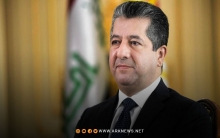
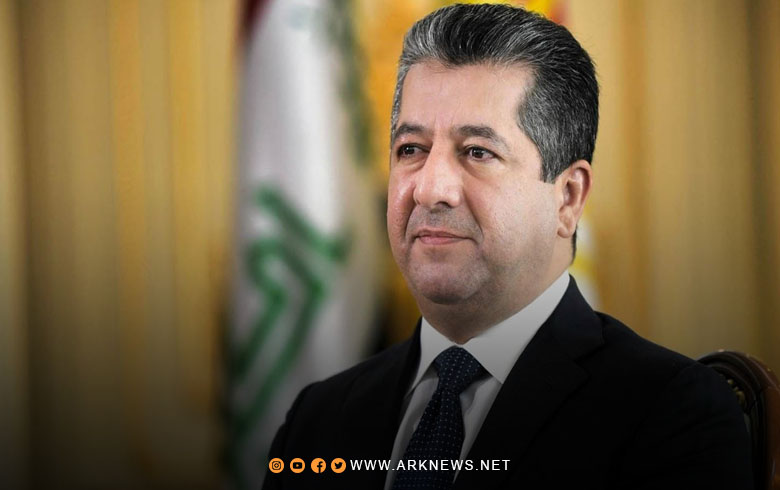
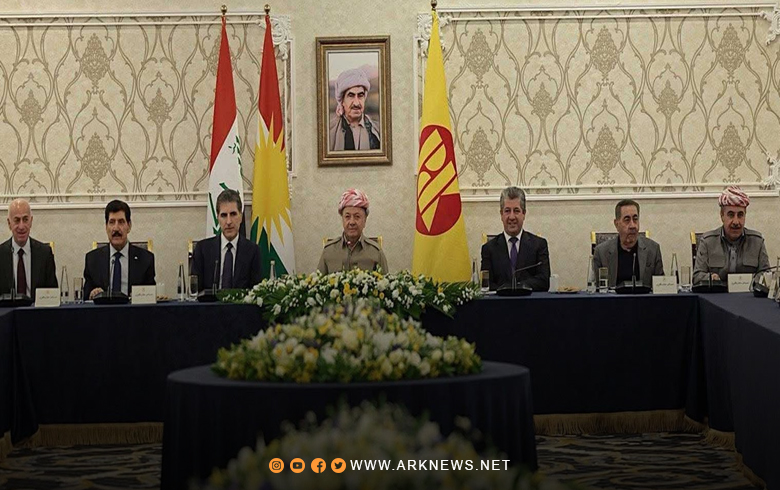
ARK News.. President Masoud Barzani affirmed his deep pride in the progress achieved in the Kurdistan Region, stressing that the Kurdish people have grown accustomed to facing aggression throughout history and have developed resilience against it. “The Region will endure and suffer, but it will never kneel,” he said.
Speaking in an interview with Shams TV Channel, President Barzani stated, “Always let actions speak louder than words. The Kurdistan Region has great ambitions, and what has been accomplished so far is a source of pride. We look forward to further development and reconstruction in all sectors, and the regional government is implementing plans in phases.”
Barzani noted that many visitors from central and southern Iraq express admiration for Kurdistan’s progress: “In many cases, I meet Arab brothers from the south or center during holidays or special occasions, and what they say truly makes me happy. They often praise Kurdistan more than the Kurds themselves and recognize the level of progress here. Of course, we hope to see the same development across all of Iraq, but what has been achieved in Kurdistan is appreciated by both Kurds and Arabs.”
Commenting on why similar progress has not been achieved in other parts of Iraq, Barzani explained: “The reasons are very clear. Here, there is willpower, planning, precise execution, and leadership of the development process. Unfortunately, in Baghdad, there is chaos, delayed and stalled projects, and many of these projects are used for personal gain rather than reconstruction. There is neither proper planning nor good management nor a genuine will.”
Barzani recalled the post-2003 period, saying: “After the fall of the regime, we made great efforts to build a new Iraq. I spent long periods in Baghdad and worked sincerely for the benefit of all Iraqis. But over time, we realized that our efforts were being met with resistance, and it began to seem as though the Region and the Kurds were no longer welcome in Baghdad. We therefore distanced ourselves—not by choice, but because circumstances left us no other option.”
On the upcoming Iraqi parliamentary elections, Barzani said the Kurdistan Democratic Party (KDP) had initially considered boycotting them due to what he described as an unjust electoral law: “It is an unfair law that virtually determines the results in advance. Seat allocations were based on the ration card system — the mother of all corruption — resulting in inaccurate representation. We thought of boycotting, but later saw that many political forces, including in Baghdad among Shia and Sunni circles, reached the same conclusion that the law and current administration are unfit to lead Iraq forward. Since there were signs of willingness for reform, we decided to participate and explore alliances with genuine national forces that want to correct the political process. If such alliances are possible, we will move forward strongly; if not, each situation will be dealt with accordingly.”
He revealed that Baghdad-based allies had sent messages indicating readiness to form a post-election coalition for reform: “Our participation is not about gaining or losing seats — those are already fixed — but about seizing the opportunity to work with others who truly want to fix Iraq’s political system.”
Barzani stressed that the KDP has not yet entered into any pre-election alliances, saying the party’s goal is to demonstrate its strength and size first, with alliances to be decided afterward.
He noted: “In the previous elections, the KDP received 812,000 votes — without including Ninawa, Kirkuk, Baghdad, and Diyala. Adding those votes would surpass one million, and that is what we aspire to.”
Barzani reiterated that a single electoral district would be fairer: “It doesn’t deprive anyone of their rights and ensures each side gets its true representation. Why should a voter in Basra be prevented from voting for a candidate in Erbil, or vice versa? In Erbil, a seat may require 30,000–40,000 votes, while in some southern provinces, 2,000 or 3,000 votes suffice. This is unfair — I would even call these elections ‘rigged.’ The law couldn’t be changed quickly, but it must be amended in the future.”
Regarding his call for KDP candidates to represent all Iraqis, not only Kurdistan, Barzani explained: “This is not new. It has always been our principle. I recently met delegations from southern provinces — Muthanna, Kut, Amara, Diwaniyah, and Basra — and heard about their suffering from poor services, electricity, and water shortages. It is our duty to defend their rights just as we defend those of Erbil, Sulaymaniyah, Kirkuk, and Duhok. Therefore, I urged our candidates to consider themselves representatives of all Iraqi provinces.”
Asked whether Kurdistan would reciprocate the same treatment it receives, Barzani said: “What matters to me is not whether others treat us the same way. We were bombed with chemical weapons and suffered the Anfal genocide, yet we still negotiated and forgave the soldiers who committed crimes against our people. We have our own values, customs, and traditions.”
He added: “It’s true that Saddam Hussein used chemical weapons and carried out Anfal, but even those who were our allies and fought alongside us did not treat the Kurdish people as they deserved — they hurt us too. Cutting off the livelihoods of our people is a cruel act.”
Barzani concluded by warning that the same mindset which once justified the Anfal and chemical attacks persists among some in Iraq: “The mentality that sees the Kurdish people as outsiders is still present among certain Sunni and Shia groups. Today, the Shia Coordination Framework leads the state, and part of it bears responsibility for continuing this mentality.”
President Masoud Barzani reaffirmed that the Kurdish people have long been accustomed to facing aggression and have developed resilience against it, stressing that the Kurdistan Region will endure and suffer but will never kneel. “Kurdistan has the means for self-sufficiency; it only needs some time,” he said. “In any case, the Region will stand firm, will not compromise its rights, and will never bow to any hostile or unjust demand or action. Between us stands the Constitution — let it be the judge. If we ask for more than what the Constitution grants, they can refuse, but we will not accept less than our constitutional rights. If the Constitution remains the reference, there will be no problem. But if personal whims and the imposition of will take over, then whoever rejects federalism, we reject dictatorship — and let things take their course.”
On the Iraqi Constitution, President Barzani said, “No one worked harder on the Constitution than I did. I spent two months in Baghdad, during which we endured 36 rocket attacks from terrorists. We persevered. The Constitution is not without flaws, but compared to the constitutions of the region and Iraq’s past, it is progressive, comprehensive, and serves its purpose well. It has enough positives to be defended. It would make no sense for me to abandon a Constitution I worked on more than anyone else. As for the Federal Court, it is not a constitutional court — it dates back to Bremer’s era — and its decisions have become politicized and biased, targeting the Region and seeking to weaken it. That’s why we rejected its rulings. The legitimate constitutional reference should be the ‘Federation Council’ as stated in the Constitution, and it must be established in the coming stage.”
Barzani warned of growing institutional chaos in Iraq: “There is confusion and disorder. Everyone acts as though they are a state unto themselves. We have ‘mini-states within the state.’ Matters have truly gone astray, and I can’t give a precise answer. These ‘mini-states’ control everything — the parliament, the Constitution, and the government. That’s the reality.”
Regarding alleged political conspiracies in Baghdad aimed at excluding the Kurdistan Democratic Party (KDP) from the next Iraqi government, Barzani confirmed: “Of course, and we have information about it. But they would be wise to think twice. The KDP is like an oak tree — it withstands all challenges and hardships. This conspiracy — whose details we know well — will not affect the party. The KDP will confront it with its people, its program, its will, and its history. I am confident that no ‘emergency’ will shake the party.”
Speaking on Kirkuk, President Barzani reaffirmed: “Kirkuk is a Kurdish city within Iraq — it carries a Kurdistani identity, and that is non-negotiable. Article 140 cannot expire; it remains valid until it is fully implemented — normalization, census, and referendum. We ask for nothing beyond that. Any attempt to occupy or change the demography of Kirkuk is impossible — even if it succeeds temporarily, justice will eventually prevail.”
Barzani also emphasized that the post of President of Iraq is symbolic and moral: “After the Anfal genocide, the chemical attacks, and the destruction of thousands of villages, having a Kurd as president of Iraq became a symbolic gesture. In terms of authority, the Speaker of Parliament holds more power than the President. The position is not personal; it has become a convention representing the Kurds’ entitlement. Acceptance or rejection depends on other parties and the Kurdish stance.”
On coexistence within the Kurdistan Region, Barzani said: “Coexistence among components is a culture we inherited from our ancestors. We are proud of it, we protect it, and we consider it one of our top priorities. We will defend it with all our strength. The Kurdish people are hospitable, forgiving, and pure-hearted. What our people endured throughout history could have made them bitter, yet after the 1991 uprising, my pride in them only grew. The two Iraqi army corps that committed crimes in Kurdistan were captured — not a single soldier was harmed or insulted; we forgave them. These are the people’s values before any leadership decision.”
President Barzani highlighted a historical story from the Christian village of Badial during the Anfal campaign against the Barzanis: “The entire village was Christian, but its people dressed like Barzanis — you could hardly tell them apart. When the Barzanis were deported south, a group from the village went with them. They were told: ‘You are Christians, go back.’ They replied: ‘We are Barzanis; we live and die with them.’ They were martyred alongside the Barzanis, and their remains returned with ours. They chose death with the Barzanis over a life without them. That is the true meaning of loyalty and coexistence.”
Barzani underlined that the Iraqi people themselves reject the government’s policies toward the Kurds: “We take pride in the fact that despite decades of injustice, oppression, and dictatorship against the Kurdish people, successive governments have failed to create hatred between Kurds and Arabs. This is a great achievement we must preserve. Our disagreement is with the government, not with the Arab people.”
Regarding the delayed formation of the Kurdistan Regional Government, Barzani said: “A full year has passed since the elections, and it is regrettable and damaging to the Region’s reputation that the government has not yet been formed. After the elections, the KDP invited all winning parties to form a broad-based government. Most chose to go into opposition — we respect that. The issue remained between the KDP and the Patriotic Union of Kurdistan (PUK). Delegations met and reached a good agreement on governance, which is important, and even offered the PUK more than its electoral share in positions. I instructed the KDP to show maximum flexibility. However, we witnessed procrastination and a wait-and-see approach until after the federal elections — perhaps based on an assumption that the KDP would lose and new alliances would give others an advantage. If that’s the case, it will not work. That is why the government has not yet been formed.”
President Barzani concluded by saying that the KDP is not worried about elections as long as they are fair: “If there is no fraud, we are not concerned. But if there is manipulation, our stance will be firm. In the last elections, we won 33 seats, and two were taken from us by a court ruling — we tolerated it. This time, we will not accept tampering with even a single vote.”
289