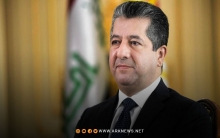
President Barzani: The Constitutional Rights of the People of Kurdistan Are a Sacred Trust Paid for With the Blood of Martyrs and Can Never Be Surrendered
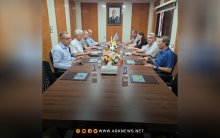
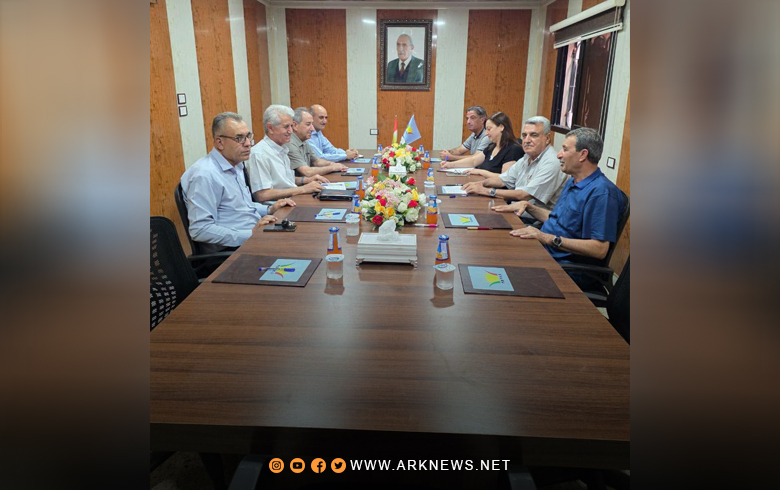
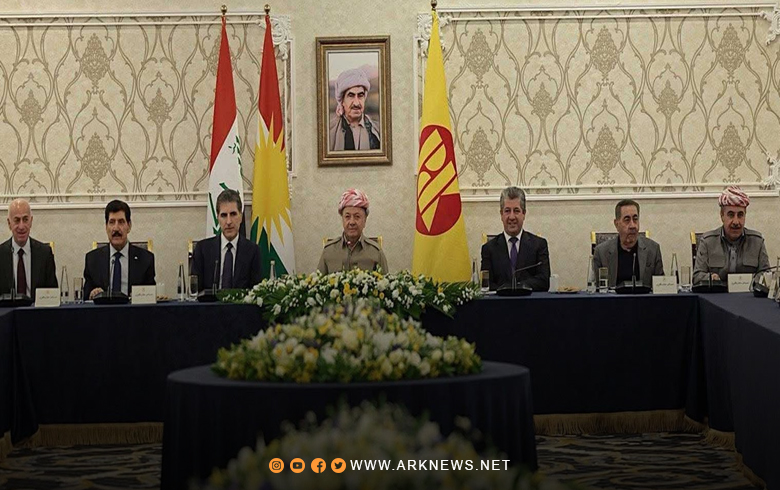
ARK News.. President Masoud Barzani met with a group of university professors, writers, journalists, intellectuals, artists, and athletes from the Kurdistan Region.
In his remarks, President Barzani expressed his pleasure at meeting the attendees and spoke about the current political situation and the upcoming sixth session elections for the Iraqi Council of Representatives.
“The elections are a democratic process through which the people must decide their own fate and freely choose their representatives,” Barzani said. “For us, elections are a matter of principle. During the March 1991 uprising in Koya, I personally called for holding elections — that’s why it’s a fundamental issue for us.”
Barzani recalled that the first free elections in Kurdistan were held in 1992, forming the foundation for building the region’s institutions. Iraq later witnessed its first free elections in 2005, following the adoption of a new constitution.
While noting his reservations about Iraq’s electoral law since 2010, President Barzani stressed that participation in elections stems from a sense of national responsibility, expressing hope that the next elections would help correct Iraq’s political course and ensure that the state is governed according to the constitution.
Speaking about the struggle, sacrifices, and achievements of the Kurdistan Region, Barzani stated: “No one has granted us these gains, nor can anyone claim credit for them. They are the fruit of the martyrs’ blood, their mothers’ tears, and the suffering of our people.”
He added that after 2003, the Kurds went to Baghdad “with goodwill and strong determination to build a new Iraq,” leading to the 2005 constitution. “This constitution may not fulfill all our aspirations,” he said, “but it contains positive principles we support. Had it been fully implemented, it would have served as a good constitution.”
Barzani expressed regret that “the culture of centralization still dominates Baghdad,” emphasizing that the Kurdistan Region will not accept anything less than what is guaranteed by the constitution.
Regarding the oil issue and the current tripartite agreement between the Kurdistan Regional Government, the federal government, and oil companies, he expressed hope that the deal would hold and form the basis for a future oil and gas law.
He reaffirmed: “The constitutional rights of the people of Kurdistan are a sacred trust granted through the blood of thousands of martyrs — and these rights can never be compromised.”
Addressing the issue of budget cuts and the suspension of salaries, Barzani said: “For me, and for every loyal Kurd with a conscience, depriving the people of Kurdistan of their livelihood was no less painful than the tragedies of the Anfal campaign and the chemical bombardments.”
He reminded the audience that the Peshmerga forces defeated ISIS, and urged intellectuals and educators to counter the alien culture seeking to instill defeatism and self-doubt among Kurdish youth, and to defend Kurdish identity and values.
“There are ongoing attempts to spread hopelessness and erode national identity,” he warned, adding that this foreign culture threatens our core values, such as the spirit of coexistence, and called on everyone to stand against these schemes.
President Barzani also highlighted the region’s progress in education, infrastructure, electricity, and construction, stressing the importance of environmental protection and calling for cooperation in preserving Kurdistan’s nature. He underscored the need to build dams and implement sound water management policies to prevent future crises.
Regarding the election campaign, he urged all parties to ensure a peaceful, calm, and respectful process, free of violence or hostility. “Every party has the right to present its program and campaign freely,” he said.
Barzani emphasized that the policy of the ruling party and the KRG focuses on laying strong foundations for future generations and serving all the people of Kurdistan for a better, more prosperous future.
On the internal political situation and formation of the new regional government, Barzani said that after the elections, he called for forming a broad-based government, but some parties chose not to participate or preferred to stay in opposition, leading to ongoing differences between the KDP and PUK.
He reiterated that the agreed government program is sound and coherent, and that cabinet posts should be distributed based on electoral entitlement. Barzani expressed hope that an agreement would soon be reached and that the new Kurdistan Regional Government would be formed before the next Iraqi parliamentary elections.
378