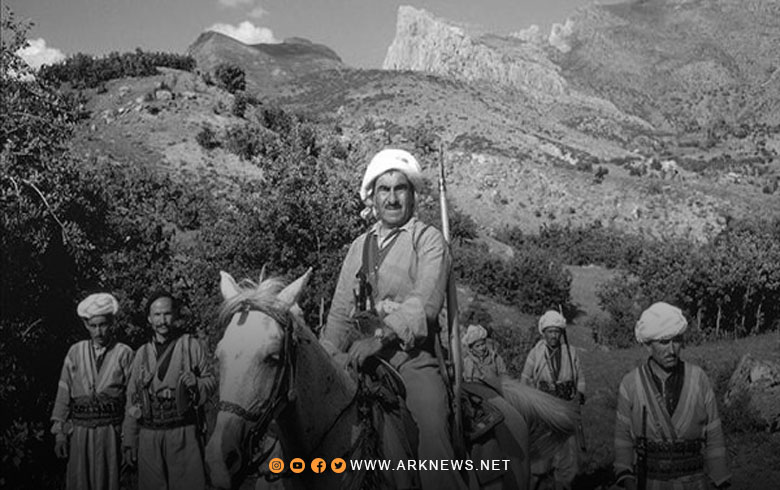
64th Anniversary of the September Revolution Led by the Immortal Barzani
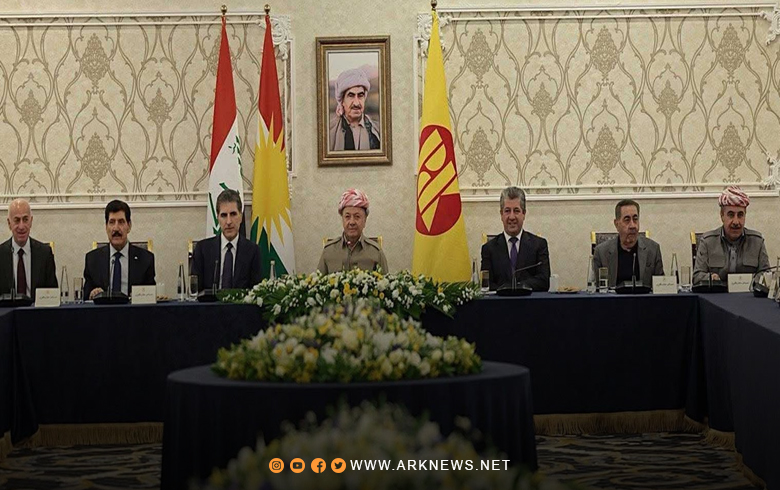
ARK News.. Today marks the 64th anniversary of the outbreak of the historic September Revolution (1961–1975), led by the legendary Kurdish leader Mullah Mustafa Barzani.
The revolution erupted as a reaction to Iraqi President Abdul Karim Qassim’s increasingly autocratic policies and deviation from the democratic and popular principles of the July 14, 1958 Revolution, which had toppled the monarchy and proclaimed the republic. The growing dominance of nationalist and chauvinist forces behind the scenes derailed Iraq’s political process, steering it toward one-man rule, curbing freedoms, and filling prisons with nationalist and democratic activists.
Barzani, who had long supported the new republic, made repeated efforts to persuade Qassim to adopt a more inclusive approach, including during their final meeting in early 1961 — but to no avail.
Following this failure, Barzani returned to his hometown of Barzan. Soon after, Qassim’s government began arresting Kurdistan Democratic Party (KDP) members, closing the party’s headquarters and its official newspaper Khabat. The regime deepened divisions by arming certain tribal leaders — known as “donkish” — and destabilizing the region politically, economically, and administratively.
On September 11, 1961, the government launched a large-scale military campaign against Kurdistan, deploying warplanes and paramilitary units (donkish) to crush Kurdish unity. Kurdish villages — particularly in Barzan, the heart of the revolution — were attacked from multiple directions.
Thus, began the September Revolution: a struggle waged by the Kurdish people, the Peshmerga, and their visionary leaders. Its fire burned for 14 years until the 1975 Algiers Agreement — widely condemned as a betrayal — ended Iranian support for the Kurdish movement in exchange for territorial concessions from Iraq over the Shatt al-Arab.
Yet the Kurdish struggle did not end there. The Peshmerga reignited the resistance with the May 26, 1976 “Gulan Revolution,” continuing the fight for Kurdish rights.
Among the September Revolution’s most significant achievements was the March 11, 1970 Autonomy Agreement, in which the Iraqi government formally recognized Kurdish rights and granted autonomy to the Kurdistan Region.
595