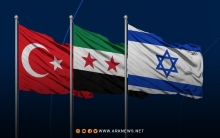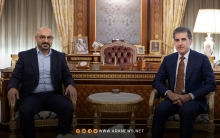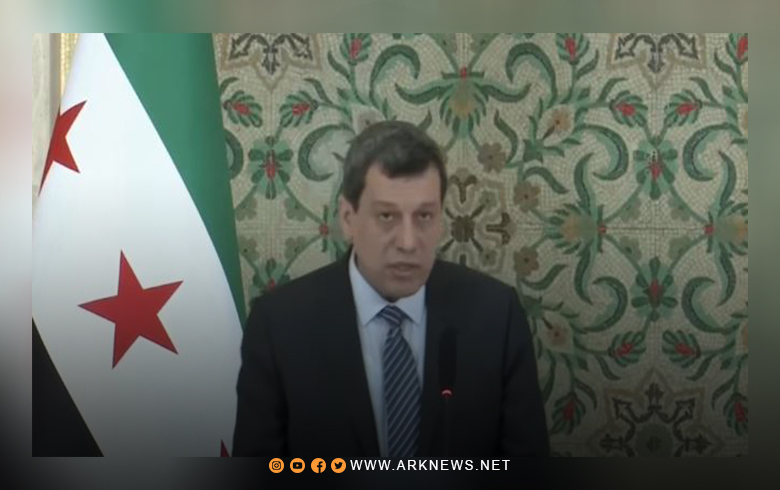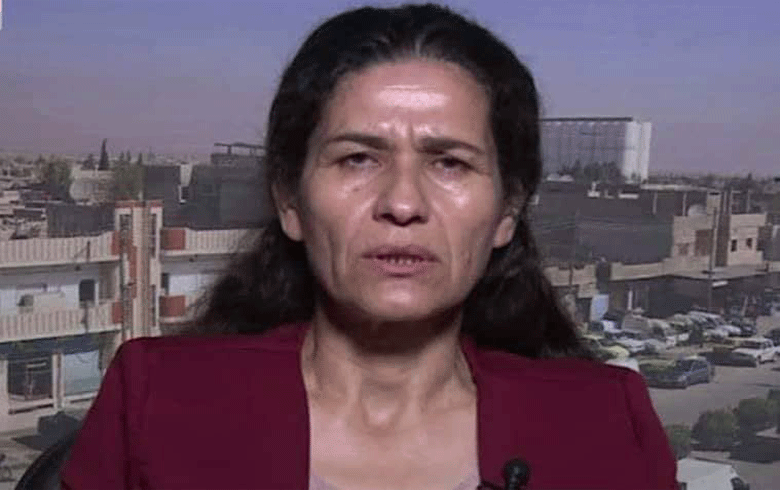
After the destruction of Afrin .. Ilham Ahmed regrets not working with Turkey and find a political solution instead of war
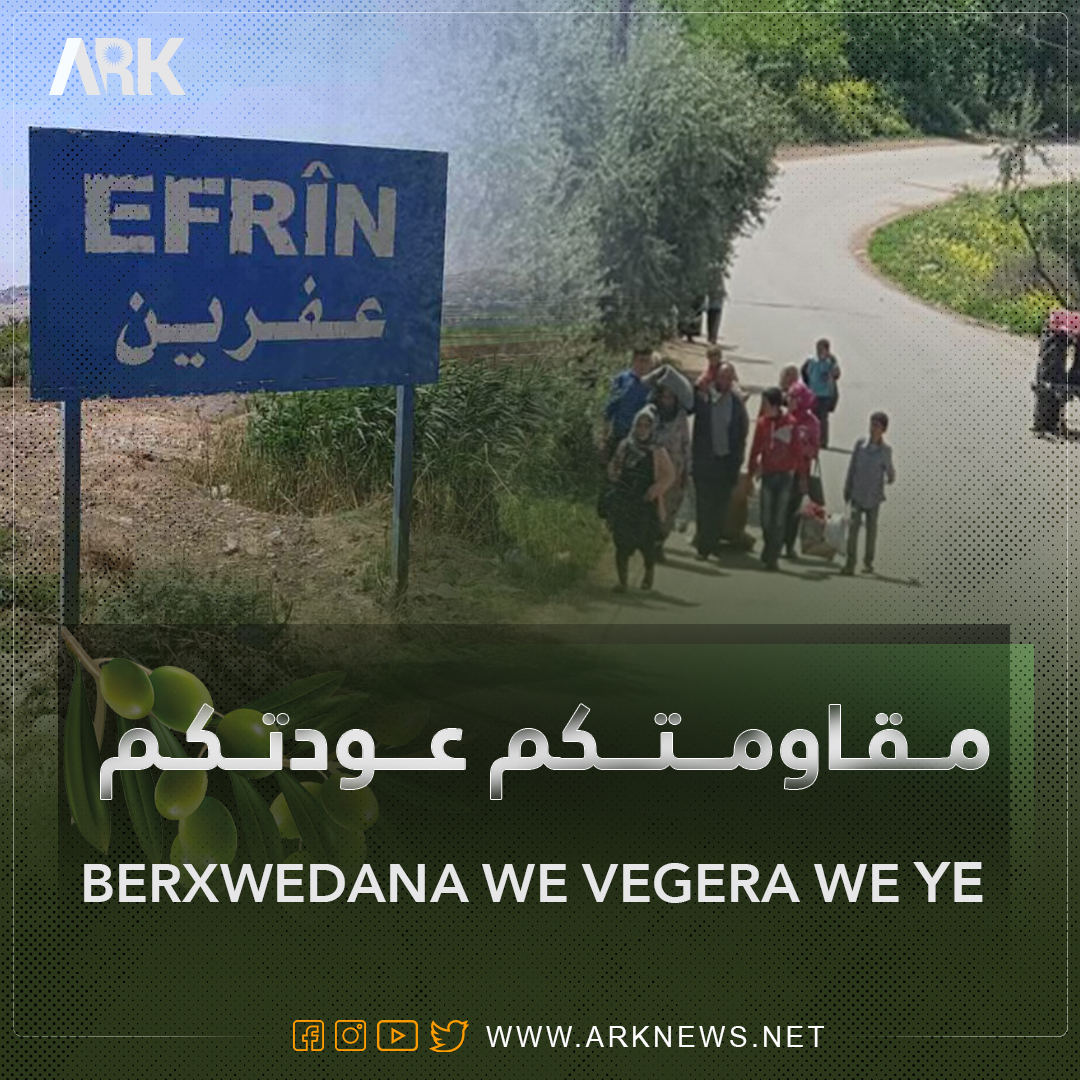
ARK News: After the destruction of the Kurdish region of Afrin by the war faced by the region, the war that caused the displacement of hundreds of thousands of Kurdish families, and the settlement of hundreds of thousands of Arab families in it, and change the demography of the region, and the martyrdom of thousands of young Kurds enlisted in the ranks of the PYD militants, As well as civilians as a result of the bombing and clashes, and more than a year and a half after the Turkish army took control of the region, a leader in the Council of Democratic Syria MSD, the military wing of the SDF, regretted not to work with Turkey before the Afrin war. "It was possible to find a political solution instead of seeing thousands of displaced people and we could have made different decisions. Maybe we could have avoided some fighting in Afrin."
Ilhan Tanir (IT): Turkish President Recep Tayyip Erdogan is talking about intervening in northeast Syria and creating a safe zone. During his speech this week, he showed a map of the proposed zone at the United Nations General Assembly. What’s your reaction to that map?
Ilham Ahmad (IA): It was clear from the beginning what Erdogan wants. He has been speaking about resettling Syrian refugees that are living in Turkey to this area. And we reject his proposal. Any country that would support Erdogan in this plan, we would consider that country as an occupying force or a country that facilitates the occupation of Syria.
IT: Yet it appears that his proposal of the safe zone is getting some U.S. support.
IT: Erdogan says he is going to build new houses with backyards and gardens.
IA: This area is not Erdogan’s farm. He wants to change the demographics. He wants to change history. It is ethnic cleansing. They settled people in Afrin too. We saw how they settled people in Afrin, what happened to Afrin. They want to do the same scenario in our region now.
IT: Are you really afraid Erdogan will carry out his promise to intervene or do you think he is bluffing?
IA: He is determined. And I would say there is a lot of risks that he is going to take action.
IT: Erdogan is arguing that the People’s Protection Units (YPG) and SDF are a national security threat to Turkey even though it is well documented that SDF and YPG fighters have not attacked Turkey. But the argument goes, if not now, in the future your structure, your fighters, when they are powerful they can attack Turkey.
IA: There has not been even a single bullet fired from our area into Turkey. If we are going to look at this way, who started the hostility? It’s Erdogan who occupied Afrin and Erdogan who brought forces from over the border and sent them to loot Afrin...We are defense forces, the core of our forces are defense, self-defense. So, we will never attack Turkey.
IT: Recently the Assad regime called the SDC a separatist terrorist organization. Do you think there is a chance for the Assad regime and Turkey to go after your group in a partnership?
IA: They might, and I think there are many regional countries brokering talks between Turkey and Assad, such as Russia and Iran.
IT: Syrian Kurds have not been invited to join Syria’s constitutional committee. Do you think this project is going to be successful without Syrian Kurdish participation?
IA: No, it is not going to succeed. The constitutional committee, it has people who represent the regime, and there are people who represent the Islamists. Even the so-called civil society representative was chosen by the UN. Half the committee disapproves of Assad, half disapproves of the Islamists. So, the committee does not represent the Syrians, and that would never achieve the hopes and what the Syrian people really want.
IT: From 2011 to 2019, has there been any moment that you have regretted some decision you made in regards to the relationship with Turkey, the Assad regime, Russia, the United States or in general with the rebellion among Syrian people?
IA: The political decisions we took were mostly right. In Afrin, the situation of Afrin, I would say that, probably, we could have taken different decisions. We could have probably avoided some battles in Afrin.
IT: You mean proclaiming Afrin a self-governing canton was the wrong decision?
IA: No, I think it was the right decision.
Turkey tried to incite a lot, incite us a lot to start something from Afrin or to resist in Afrin when they attacked. So, I would say that we could have probably found a political solution for Afrin rather than seeing thousands of people displaced.
IT: You mean find some kind of political solution with Turkey before the war for Afrin?
IA: We could have worked with Turkey in Afrin. However, the international powers over there in Afrin are different than east of the Euphrates. The American influence on Turkey is different than the Russian influence on Turkey as well.
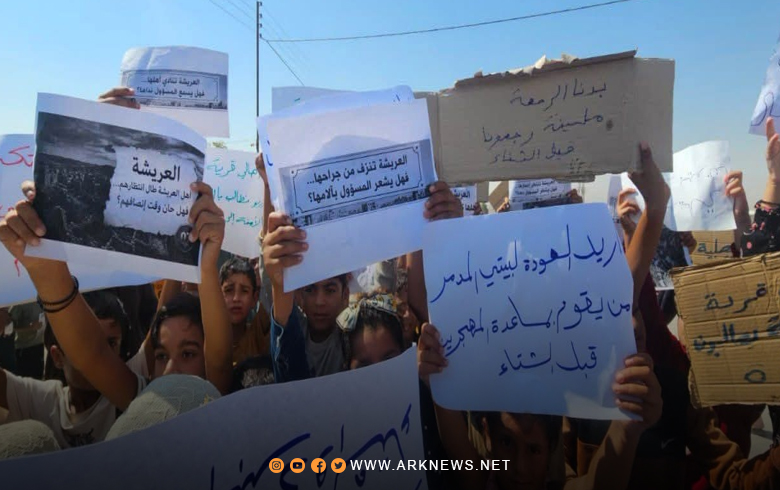
The war on Afrin killed thousands of civilians and military personnel who were forced to serve with the PYD, and destroyed the infrastructure of villages, institutions, government departments, and civilian service centers, such as schools, hospitals, clinics, mosques, and so on, and the worse, that war caused the entry of factions militias that wreaked havoc in the region, which is changing the demography of the region, which was Kurdish 99/100, while more than two-thirds of the population of the region is Arab settlers families, committing crimes against the remaining civilians in the region. With the aim of removing what is left of the area and emptying it completely. Despite the tragedies and disasters that occur daily in the region, the fate of the region is still unknown, and finding a solution and restoring security to it is on the horizon.
1231