Le Figaro: Bashar al-Assad Rejected a U.S. Offer and Was Ousted Months Later
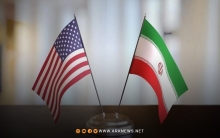
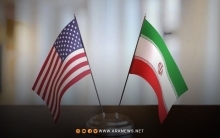
ARK News.. The French newspaper Le Figaro has revealed details of secret negotiations between Syrian diplomats and U.S. officials, driven by Washington’s desire to restore ties with Damascus. However, former Syrian President Bashar al-Assad firmly rejected the initiative, surprising senior officials on both sides and contributing to his ousting just months later.
In a revelation made public for the first time, Le Figaro’s special correspondent in Damascus, Middle East expert Georges Malbrunot, reported that in early 2024, the Biden administration sent a message to Assad via an Arab state, which dispatched a high-ranking official to meet with then-Syrian Foreign Minister Faisal Mekdad.
The message conveyed was clear: “Washington is interested in starting secret talks on specific issues as a first step toward broader negotiations.”
Assad’s response was swift and unexpected: “No, we do not talk to the Americans.”
The visiting Arab official, taken aback by Assad’s outright refusal, contacted his country’s leader, who immediately called Assad, urging him to reconsider, arguing that “it makes no sense to reject a dialogue channel with the United States.”
Despite the initial rejection, a Syrian delegation was later sent to the Arab country. It was led by veteran diplomat Imad Mustafa, a former ambassador to both the U.S. and China, demonstrating a degree of Syrian interest in the talks.
In a sign of Washington’s seriousness, U.S. President Joe Biden dispatched Brett McGurk, one of his top Middle East envoys, to the negotiations.
The Syrian delegation, however, was closely monitored. Mustafa was accompanied by two senior Syrian intelligence officers—a standard practice in a regime where internal surveillance was the norm.
On the eve of their departure, Assad reiterated strict instructions: “Do not, for a single moment, think you are negotiating with the Americans! You must reject everything they propose.”
The Syrian delegation found itself caught in a diplomatic dilemma, struggling to understand their leader’s stance.
A frustrated Syrian delegate later told Le Figaro: “Our country was in a dire situation—completely isolated internationally, with a struggling economy and a population living in poverty—yet we were forced to reject any proposal that could have helped us recover.”
During the negotiations, McGurk outlined Washington’s offer:
“We want Syria to cooperate in locating Austin Tice, the American journalist who disappeared in 2012 near Damascus. In return, we are willing to withdraw our forces from the Conoco and al-Omar oil fields in northeastern Syria, allowing Syrian forces to take over. However, we have two conditions: only Syrian troops can be stationed there—no Iran-backed militias—and these areas must not be used to launch attacks on our soldiers.”
At the end of the first round of talks, McGurk discreetly approached a Syrian delegate, suggesting they exchange WhatsApp numbers for direct communication.
Both sides agreed to reconvene in three weeks. However, upon learning of this exchange, Assad reacted furiously: “Who gave you permission to share your phone number?” He then ordered the delegate to delete McGurk’s contact immediately and banned him from attending future negotiations.
When the U.S. learned of Syria’s final rejection, Arab leaders attempted to persuade Assad to reconsider. Though he initially promised to do so, he ultimately sent a message days later stating: “Forget it, we have stopped the process.” The decision deeply frustrated Syrian diplomats, who saw it as a lost opportunity to regain vital oil fields and secure political and economic gains.
According to multiple sources, Assad’s final rejection came in October—just weeks before the Battle of Aleppo, a prelude to his downfall on December 8.
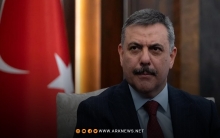
Assad displayed similar stubbornness in rejecting Turkey’s proposal for talks on Idlib, despite Iran, Russia, and Iraq urging him to meet with President Recep Tayyip Erdoğan.
A Le Figaro source noted that it was no surprise when Assad’s allies eventually abandoned him as his forces collapsed, forcing him to flee Damascus.
792