War Remnants Kill or Injure 2,375 People in Syria Since Fall of Former Regime
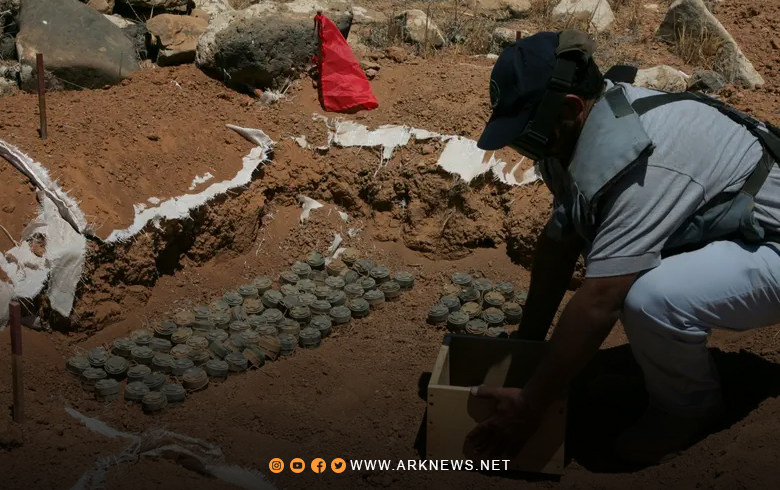
ARK News.. Since the ousting of Bashar al-Assad’s regime on December 8, 2024, Syria has recorded 1,337 incidents involving explosive remnants of war, resulting in 2,375 people killed or injured, including more than 850 children, as landmines and other war remnants continue to threaten civilians and hinder the return of normal life to affected areas.
According to France Press Agency (AFP), the organization HALO Trust has documented nearly 700 people killed or injured in explosions involving landmines and other explosive remnants of war. About one-third of these incidents resulted in fatalities, while children accounted for roughly one-third of the victims—equivalent to nearly one person being killed or injured every six hours.
According to AFP, the Syria Mine Action Coordination Mechanism, which brings together international and non-governmental organizations and is led by the United Nations Mine Action Service (UNMAS), reported that 2,375 people had been killed or injured in recorded incidents since the fall of the former regime. The mechanism warned that the actual toll is likely higher.
A preliminary report published in June by the Landmine and Cluster Munition Monitor found that Syria recorded the highest number of casualties in the world last year from landmines and explosive remnants of war, with 1,600 people killed or injured.
According to Simon Jackson, director of HALO Trust’s Syria program, the number of incidents rose sharply in early 2025 as displaced Syrians began returning to their home areas following the fall of the former regime.
More than 60 percent of the recorded incidents occurred in agricultural fields or grazing areas, increasing the risks faced by residents attempting to resume farming and livestock activities and rebuild their lives in areas they had been forced to abandon.
The continued presence of landmines and explosive remnants of war remains a major humanitarian and security challenge across Syria, particularly in areas witnessing large-scale returns of displaced populations.
17