Syrian Foreign Ministry: Damascus–SDF Agreement Includes Four Defined Phases
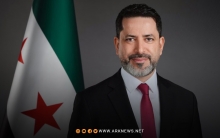
ARK News.. Mohammad Taha Ahmad, Director of Arab Affairs at the Syrian Ministry of Foreign Affairs, revealed that the announced agreement between the Syrian government and the Syrian Democratic Forces (SDF) constitutes a continuation of the steps outlined in the March 10 agreement, noting that there are some differences in specific clauses between the two accords.
Speaking during an interview on the program “Syria Today,” Ahmad said the new agreement does not represent a radical shift, but rather an extension of the executive mechanisms agreed upon in March. He stressed that the agreement falls within the framework of unifying Syrian territory and preventing any form of division or separatism.
Ahmad explained that the agreement includes a set of detailed measures aimed at improving the security and administrative situation in areas previously controlled by the PYD administration. He added that the deal embodies a practical approach to integrating Syria’s societal components and reflects a firm commitment to national unity and the return of all regions to the authority of the Syrian state.
He further emphasized that Syrians today insist that security and economic affairs remain under the umbrella of the Syrian government, asserting that there will be no room for separatism or attempts to fragment the country.
Regarding the integration of SDF forces, Ahmad confirmed that they will become part of the Syrian Arab Army, though the process will be subject to specific conditions. He explained that integration will take place through the formation of three brigades in the Hasaka and Qamishli areas, provided that joining personnel pass security screenings and assessments in accordance with criteria set by the Syrian Ministry of Defense.
He noted that the integration process will follow defined mechanisms to ensure that the Syrian army represents the Syrian people and carries out its national duties. The process, he added, will be supervised by the Ministry of Defense and conducted according to technical and security standards, with all military forces remaining under the direct authority of the Ministry of Defense, without affiliation to any external parties.
On local governance in “Western Kurdistan,” Ahmad stated that the agreement aligns with Syria’s Local Administration Law No. 107, which stipulates that governors must be from the local population and elected through legally recognized councils. He added that the Syrian state does not oppose the appointment of governors nominated by the SDF, provided this is done in accordance with established legal procedures.
Ahmad stressed that these steps aim to reassure the Kurdish population in Syria, noting the government’s readiness to support Kurdish-majority areas and strengthen national belonging through such appointments. He also affirmed that appointing Kurdish figures to senior positions within state institutions poses no issue, as long as they remain committed to Syria’s national interest.
Regarding implementation, Ahmad explained that the agreement consists of four clearly defined phases: an initial military-security phase, followed by a security-administrative phase, then a phase focused on managing vital facilities, and finally the integration of civilian institutions into the structure of the Syrian government.
He emphasized that each phase has a specific timeline that must be respected to ensure proper implementation, noting that the government expects all stages to be carried out without delay.
Addressing potential challenges, Ahmad acknowledged concerns about delays in implementing certain provisions, particularly those related to military and security integration. However, he expressed optimism, reaffirming the government’s commitment to swiftly implementing the agreement and continuing efforts to unify Syrian territory and centralize arms under state authority.
“Any delay in implementing this agreement will result in greater losses for all parties,” Ahmad said. “We are committed to its execution and will not allow any obstruction.”
On the issue of removing Kurdistan Workers’ Party (PKK) elements from Syrian territory, Ahmad stated that this matter will be addressed through joint efforts with neighboring countries, particularly Turkey and Iraq. He confirmed that the Syrian state is working to ensure an orderly withdrawal of these elements as part of the broader integration process.
He added that developments on the ground have made it clear that the Syrian state is proceeding with unifying the country and monopolizing arms under government supervision, noting that “the majority of these elements are now outside Syrian borders.”
257