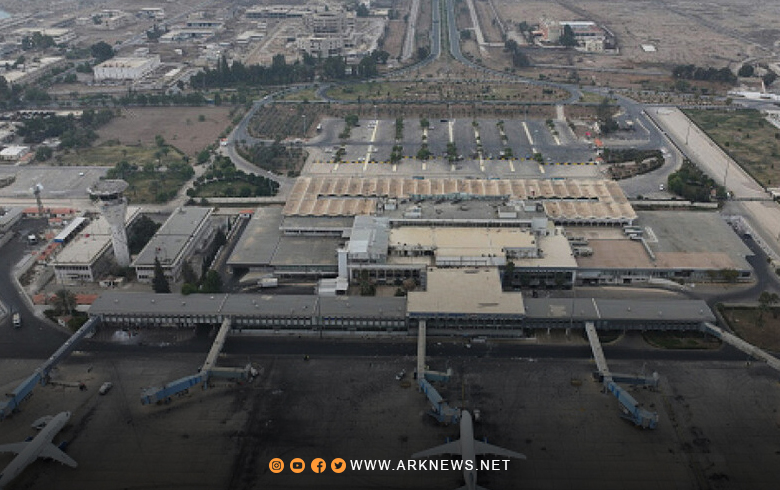
Israeli Alma Center Raises Concerns Over Turkish Radar Deployment at Damascus International Airport
Israeli Alma Center Raises Concerns Over Turkish Radar Deployment at Damascus International Airport
ARK News.. The Israeli Alma Research and Education Center has published a report examining Turkey's deployment of the HTRS-100 radar system at Damascus International Airport.
In the report, titled "Damascus Airport: The Technological Dimension and the Air Threat," the institute said that although the deployment has been officially presented as part of a civilian air navigation modernization project, the HTRS-100 system could provide Ankara with advanced capabilities for aerial surveillance and intelligence gathering, with coverage extending into parts of Lebanon and northern Israel.
According to the report, the development reached a key stage in January 2026 with the deployment of the ASELSAN-manufactured HTRS-100 radar system at the airport.
The institute said its analysis of the system's technical specifications suggests it could also be used for military and intelligence purposes with significant strategic implications.
The report states that the HTRS-100 can generate a highly accurate three-dimensional air picture within a range of 80 to 100 nautical miles (approximately 150–185 kilometers), covering not only the skies over Damascus but also large parts of Lebanon and extending into northern Israeli airspace.
It added that the system combines a primary S-band surveillance radar equipped with advanced algorithms to suppress environmental and aerial interference alongside a secondary surveillance radar featuring an Identification Friend or Foe (IFF) interrogator capable of supporting complex military verification procedures.
The report also highlighted the radar's redundant architecture, which enables it to continue operating, at least partially, even if damaged or subjected to electronic failures, making it highly resilient against advanced electronic warfare measures.
According to the institute, these capabilities make the system a strategic platform for intelligence collection and the production of highly reliable real-time operational data.
The Alma Center concluded that, from Israel's perspective, the deployment represents a significant threat to the Israeli Air Force's freedom of aerial operations in the region.
229