The 100th Anniversary of the Execution of Sheikh Saeed Piran and Dozens of His Companions
ARK News.. Sunday, June 29, 2025, marked the 100th anniversary of the execution of Sheikh Saeed Piran and dozens of his companions.
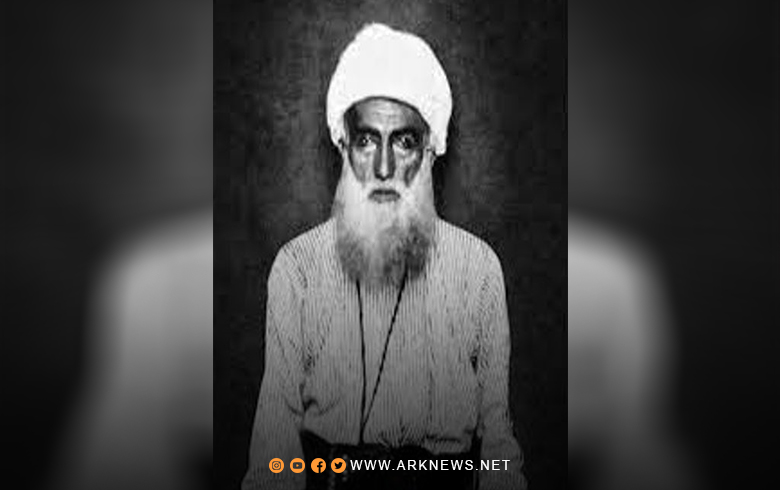
A Brief Biography of Sheikh Saeed Piran:
Saeed, son of Sheikh Mahmoud bin Sheikh Ali, was born in 1865 in the Balo district of Turkish Kurdistan. He received his early education from his father, memorizing the Quran and learning the basics of reading, writing, and Islamic jurisprudence.
Upon completing his studies, he became a renowned religious scholar and succeeded his father as the spiritual leader of the order in Balo. Sheikh Saeed was politically active from the early days of Kurdish associations and organizations between 1908 and 1923, maintaining close ties with prominent nationalist families such as the Badir Khan family and the family of Sheikh Obaidullah Nahri, along with other contemporary Kurdish leaders.
After the arrest of some leaders of the Azadi Society (Khalid Jibran and Youssef Zia) in 1924, the society convened a congress in Aleppo, Syria, electing Sheikh Saeed as its president. They decided to launch a general uprising to demand Kurdish national rights, setting its start for the Kurdish national holiday of Newroz on March 21, 1925. Sheikh Saeed toured Turkish Kurdistan to rally support for the uprising.
When Sheikh Saeed and around 100 horsemen reached the village of Piran, they encountered an Ottoman detachment sent to arrest certain Kurds. A firefight ensued in which some Turkish soldiers were killed and others captured.
News of this clash spread quickly. Kurdish leaders assumed Sheikh Said had declared the uprising and began attacking Turkish forces. Sheikh Saeed's brother, Sheikh Abdulrahman, seized control of the city of “Genç”, which was designated as the provisional capital of Turkish Kurdistan.
The revolt spread rapidly. For a brief period, the rebels controlled much of Kurdistan (14 eastern provinces). Around 600,000 Kurds joined the uprising, along with approximately 100,000 Circassians, Arabs, Armenians, and Assyrians.
The rebels besieged the city of Amed until Turkish reinforcements with heavy weapons arrived. Despite storming the city, the rebels failed to capture it entirely, and Sheikh Saeed ordered a retreat. Turkish forces encircled the rebels, preventing them from escaping into Iraqi, Syrian, or Iranian Kurdistan. Eventually, Sheikh Saeed and many leaders of the uprising were captured.
In a summary trial, 49 commanders and fighters, including Sheikh Saeed Piran, were sentenced to death. The sentence was carried out on June 29, 1925.
Before his execution, Sheikh Saeed declared at the gallows:
"My natural life is ending. I have sacrificed myself for my people, and I do not regret it. We are happy because our descendants will not be ashamed of us before our enemies
547