Tom Barrack: Al-Sharaa Is Ready to Normalize Relations with Israel
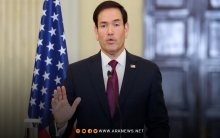
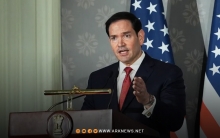
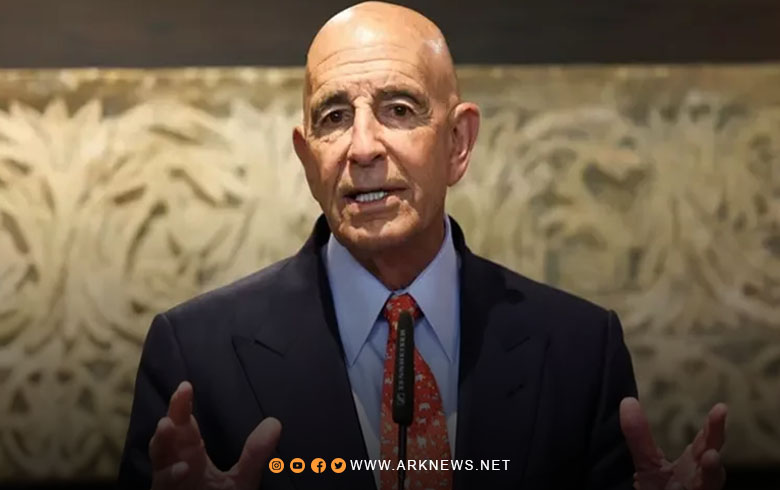
ARK News.. U.S. Special Envoy for Syria Tom Barrack said it was time to stop Israeli attacks on Syria, calling for de-escalation in the region and urging the parties to prioritize dialogue over military confrontation.
Barrack made the remarks during a discussion at the Doha Global Security Forum on Tuesday, October 20, 2026. The discussion covered developments in Syria, Israeli-Turkish relations, the future of the Syrian Democratic Forces (SDF), and Washington’s role in addressing regional crises.
He described the political transition in Syria following the fall of Bashar al-Assad’s regime on December 8, 2024, as an example of how sanctioned groups and entities could move in a different direction. He argued that completely eliminating such groups was not a practical solution and that providing a path toward stability and prosperity was essential to achieving political change.
Barrack added that, despite difficulties and challenges, developments in Syria had taken a positive direction in recent months. He said that, in his assessment, Syrian President Ahmed al-Sharaa had performed well under extremely complex circumstances.
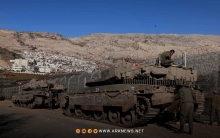
Asked about repeated Israeli attacks on Syria and the occupation of Syrian territory, Barrack said, “It is time to stop this.”
He added that he was unsure whether the time had come for direct U.S. intervention to halt the attacks. Barrack explained that Israel had been uncertain about al-Sharaa since he took power because of his past association with the al-Nusra Front. He said Israel had preferred to wait and assess the nature of the new system of government and whether it would pose a security threat.
He noted that al-Sharaa had conveyed to Israel that he held no hostile stance toward it and wanted to normalize relations. However, Barrack said Israel continued to approach these proposals with caution.
Barrack also addressed the SDF and the Kurdish issue, noting that the United States had supported the People’s Protection Units (YPG) in the fight against ISIS, despite what he described as the force’s links to the Kurdistan Workers’ Party (PKK), which Washington and Ankara designate as a foreign terrorist organization.
He said many had not expected the SDF to be integrated into the army of a single state, but that this had become possible thanks to the roles played by SDF General Commander Mazloum Abdi and Syrian President Ahmed al-Sharaa.
Regarding tensions between Israel and Turkey, Barrack said he did not believe either country wanted to be drawn into a direct military confrontation. He argued that escalating rhetoric between the two sides did not necessarily indicate a genuine desire for war.
He warned that the greatest danger lay in an unintended military incident. As an example, he cited an incident involving Israeli aircraft entering a Syrian airbase near the Turkish border, accompanied by communications disruption and a failure to notify Turkey and the United States in advance of the aircraft’s arrival.
Barrack said such an incident could have triggered another crisis, stressing the need for practical steps to reduce tensions and strengthen mutual respect.
Barrack emphasized the need to ease economic pressure, reach a ceasefire, open economic corridors, and maintain dialogue among the parties concerned. He argued that military solutions had failed to resolve the region’s crises.
He concluded by stressing the importance of bringing the conflicting parties to the negotiating table and gradually removing military options from consideration to create space for more stable solutions to the region’s crises.
36