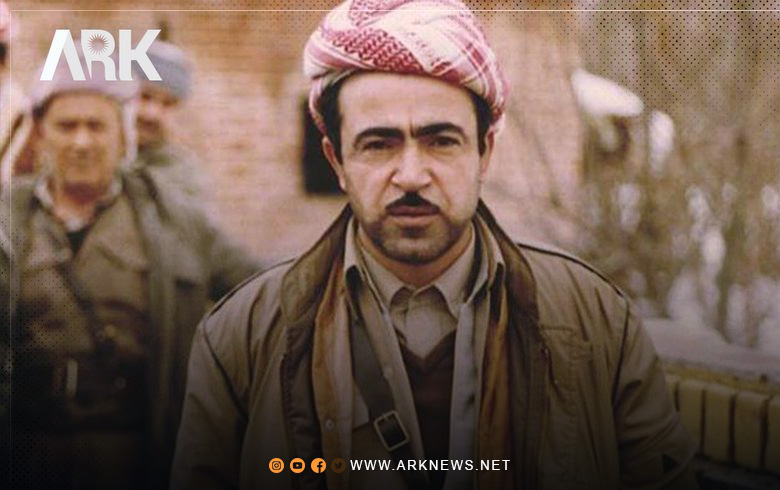
37 years since the departure of the immortal Idris Barzani, the architect of the revolution and national reconciliation
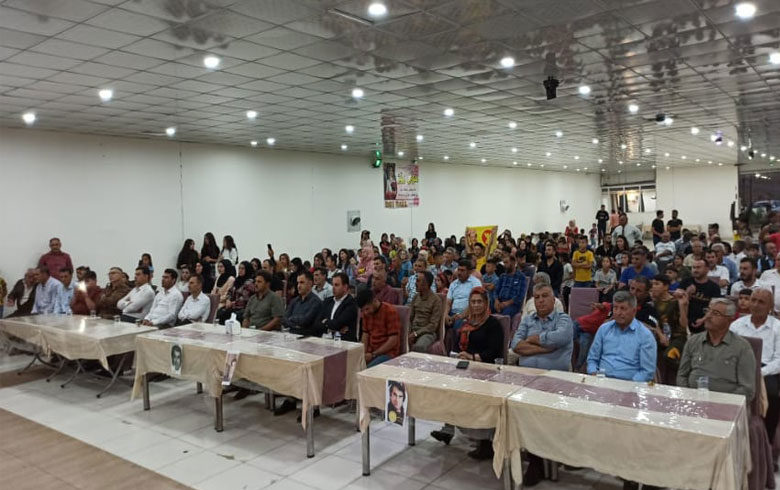
ARK News… Today, January 31, 2024, marks the 37th anniversary of the departure of the fighter Idris Barzani, who worked during his period of struggle and armed struggle for the rights and unity of the Kurdish ranks and the rejection of differences with the aim of achieving the higher goals of the Kurdistan liberation movement.
Idris Barzani was born in 1944 in the Barzan region of the Kurdistan Region, and belongs to a family that has devoted itself to serving the Kurdish cause from the beginning of the last century until the present day.
At the age of six, Idris Barzani entered school in the city of Karbala, where the family was deported. He was deprived of seeing his father until the overthrow of the monarchy in Iraq at the hands of Abdul Karim Qassim in 1958, after which Barzani Sr. returned from the Soviet Union with his companions, and the family was reunited again after long separation.
The literature of the Kurdistan Democratic Party says that Idris Barzani joined the revolution and the ranks of the Peshmerga from the beginning of the outbreak of the September Revolution after the return of the immortal Barzani from the Soviet Union and Abdul Karim Qassim reneged on his pledges he had made to Barzani, as Idris Barzani was one of the members of the first groups of Peshmerga that took up arms to defend the land and the nation. He participated in many epics written by the Peshmerga forces at that time.
After 9 years of working in the ranks of the Peshmerga and struggling for the cause, Idris Barzani was elected for the first time at the party’s eighth conference, which was held in Nubardan in Jalala district, as a member of the Central Committee of the Kurdistan Democratic Party.
With the beginning of negotiations with the Iraqi government in order to bring peace to Kurdistan and Iraq, Idris Barzani and his brother Masoud Barzani were chosen to be members of the negotiating delegation, which included the martyr Saleh al-Yousifi, Dara Tawfiq, Sami Abdul Rahman, Nafez Jalal, and Mahmoud Othman, and from there Idris Barzani moved from struggle and armed struggle to political struggle, and the diplomat for the cause of his people. The negotiations, which were supervised by the immortal Barzani, continued until they culminated in the formal achievement of autonomy for Iraqi Kurdistan and the March 11 agreement was concluded, which brought joy to the hearts of the people of Kurdistan and Iraq alike.
After the Algiers Agreement, Idris Barzani was forced to take refuge with his family and groups of Peshmerga in Iran, and this fighter did not rest his mind after the setback of the revolution, as he began, from the first days of the end of the revolution, with his brother Masoud Barzani, to move and work to restore the political and military organization and prepare the atmosphere for rebuilding party organizations and forces. The Peshmerga and the resumption of revolutionary activity again.
In 1979, major changes occurred on the political map and the balance of power in the region, as the Islamic Revolution succeeded in Iran and the Shah fled from it. Likewise, the Baath Party in Iraq consolidated its bases with the coup led by Saddam Hussein against Ahmed Hassan al-Bakr, and began a campaign to deport the Kurdish border villages at a depth of 30 kilometers, and their citizens were transferred. Those villages were transferred to forced compounds on the outskirts of the cities, and Iraqi forces took control of those areas.
Meanwhile, the Iran-Iraq war broke out, and the Iraqi government wanted to sow discord among the Kurdish political parties and forces with the aim of sapping their strength. It was able to some extent to achieve some of its goals, and some disagreement occurred between the Kurdistan parties that were taking up arms against the Iraqi authorities. But Idris Barzani felt the danger threatening the revolution, so he took the initiative to propose a peace project between the Kurdish forces and the Kurdistan liberation movement. The initiative resulted in 1986 in laying the foundations and first building blocks for the United Kurdistan Front, which in turn resulted in the building of a new force in the Kurdistan political arena in 1988.
Idris Barzani is known in the history of the Kurdistan liberation movement as the architect of national peace. He is also a well-known and prominent figure among the parties of the Iraqi opposition forces that were on the scene in general. He had an effective and influential role in the opposition conference held in Tehran in order to gather forces and work to overthrow the regime in Baghdad.
At the diplomatic level, Idris Barzani had a rich experience, especially in his efforts to achieve peace and reconciliation between political forces and unify the opposition parties.
On January 31, 1987, Idris Barzani passed away from us after he suffered a sudden illness. With his loss, the liberation movement for the people of Kurdistan lost a great personality and a unique and courageous leader. His body was laid to rest in the village of Halaj, in the Margur region of Urmia Governorate, in eastern Kurdistan (Iranian Kurdistan).
After the 1991 uprising and the liberation of the largest part of the territory of Iraqi Kurdistan (Kurdistan Region), the body of the late Idris Barzani, accompanied by the body of his father and the immortal spiritual father of the Kurds, Mustafa Barzani, was returned to the homeland on October 6, 1993, so that their bodies could be buried in the Barzan region, the homeland of fathers and grandfathers. Let their resting place become a shrine for thousands of citizens of Kurdistan and other parts and foreign delegations annually.
3449