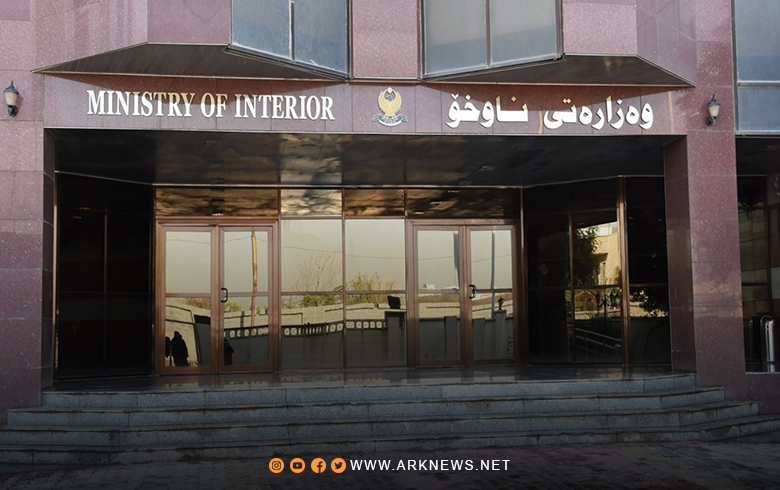
Kurdistan Region Interior Ministry Urges Baghdad to Implement Sinjar Agreement, Warns of Security and Administrative Complications
ARK News.. The Ministry of Interior of the Kurdistan Regional Government (KRG) has called on the Iraqi federal government to honor the Sinjar Agreement, signed in October 2020 under United Nations auspices, warning that arrangements concerning the district made without consultation with the Kurdistan Regional Government could complicate the security and administrative situation and hinder efforts to normalize conditions and restore stability.
In a statement issued on Tuesday, October 27, 2026, the ministry said it was concerned about unilateral understandings reached by the federal government regarding the situation in Sinjar. It stressed that, according to the statement, any such steps run counter to the Sinjar Agreement signed under UN auspices.
The ministry emphasized the need to respect the sacrifices made by the Peshmerga forces during the liberation of Sinjar and Mount Sinjar, noting that 500 Peshmerga fighters were killed and 3,000 injured during those operations. It warned that imposing an unacceptable security and administrative reality outside legitimate institutional frameworks could further complicate conditions in the area and obstruct the normalization process.
The ministry said full implementation of the Sinjar Agreement was, in its view, the way to ensure the establishment of a legitimate administration that includes genuine representatives of the area, while allowing reconstruction efforts to resume and security and stability to be strengthened.
The statement linked stability and reconstruction to creating the conditions necessary for the voluntary and dignified return of hundreds of thousands of Yezidis to their areas, describing these issues as essential to restoring normal life in Sinjar.
The ministry called on the federal government to implement the Sinjar Agreement and honor the agreements and political programs of successive federal governments concerning administration, security, and reconstruction. If implementation of these agreements proves impossible, the ministry proposed referring the matter to the will of Sinjar’s residents, particularly the Yezidi community, to allow them to choose what they consider appropriate for the future of their area. It called on all parties to respect and support the residents’ choices.
The ministry concluded by stressing that the stability of Sinjar and the safety of its residents must take precedence over other interests and objectives.
7