Anniversary of the departure of the Kurdish poet Dildar, author of the Kurdish national anthem, Raqeeb
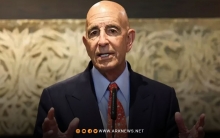
ARK News… On this day in the year 1948, the Kurdistan people lost the poet Younis Mulla Raouf, nicknamed Dildar, the writer of the poem “Ey REQÎB”, the national anthem of the Kurds.
A brief about his life
The poet Younis Mulla Raouf was born on February 20, 1918 in the city of KOYE, administratively affiliated with Erbil Governorate, the capital of the Kurdistan Region. He studied primary and middle school in Koya and Rania schools, then moved to Kirkuk to study secondary school. He studied at the university in Baghdad, the Iraqi capital, and graduated from the Faculty of Law in 1945. Then he practiced his profession as a lawyer, defending the causes of the oppressed, especially the Kurds.
The sources add: Dildar did not specialize only in literature, but also in the field of other sciences, which he used for the progress and prosperity of his country. For this reason, he had a history in matters of philosophy, economics, and patriotism, and there are a number of his literary and scientific productions.
His arrest and writing of the Kurdish national anthem:
After Dildar joined the Kurdish Hewa Party in 1938, he traveled to Iranian Kurdistan, and was arrested by Iranian security. In his detention, he composed his well-known poem (Ey REQÎB), addressing and challenging the prison guard. He meant the censor, the occupying and dividing governments of parts of Kurdistan, which still treat the Kurds with injustice and oppression, with iron and fire. The foundations of racism, denial, rejection and racial discrimination.
Then the poem composed by Hussein Al-Barzanji became a national anthem for the Republic of Kurdistan in Mihabad, led by the freedom fighter Qazi Muhammad, which lasted for 11 months. It is the national anthem of the four parts of Kurdistan, and today it is considered the official anthem of the Kurdistan Region.
His death:
The Kurdish poet Dildar died on November 12, 1948, in the prime of his youth, only 30 years old. He was buried in the large cemetery in Erbil, the capital of the Kurdistan Region.
1678