Baghouz .. The new trend of the conflict in Syria
Baghouz ... The new trend of the conflict in Syria
By: Dr. Abdul Hakim Bashar
ARK News: The declaration of the International Alliance and with the DSF of the end and fall of the Caliphate in Iraq and Syria After their controlling the Baghouz, that state which the terrorist organization of Da’esh declared it in 2014 and saw its end with the fall of Baghouz.
This event, the fall of Baghouz, took the largest size and broadest area of attention from the world media, political analysts and leaders of states with everyone's affirmation that the termination of the so-called Caliphate does not mean ending the terrorist organization of Da’esh, however, none of these analyses, as far as I know, did not link the events that preceded the fall of Baghouz, and accompanied with each other in a systematic way out of what may be the conflict in Syria in the next phase, where the events took place in a seemingly separate sequence, but they are interrelated in content, and together constitute a new situation in Syria and these events:
1. Calling the president of the Syrian regime to Tehran and his non-protocol meeting with Mr. Khamenei with the presence of Qasim Soleimani and with the absence of Iranian Foreign Minister, this meeting, which was absent from the official regime's flag and the with presence of Qasim Soleimani, has military clues from Tehran to the president of the regime and as the governor of an Iranian state had the privilege of meeting with Khamenei to take the new instructions which is certainly purely military in nature because of the absence of the head of Iranian diplomacy from the meeting and the presence of the most important Iranian military figure.
2. The meeting of the chiefs of staff of the three countries of the Syrian regime, Iran and Iraq after the Tehran meeting emphasizes the military dimension to summon the head of the Syrian regime to Tehran, and the absence of the Russian Defense Minister for this meeting is evidence that there is military action in Syria outside the context of coordination with Russia.
3. The visit of the Russian defense minister after the meeting of the chiefs of staff of the three countries to Syria, which is intrinsically linked to that meeting.
4. Declaration of the international coalition forces and the DSF for the end of the so-called Caliphate state in Iraq and the Levant after the control of Baghouz.
The linking of these events with each other with the military escalation taking place in Idlib and statements of the minister of "defense" of the Syrian regime that the DSF either accept the principle of reconciliation, i.e. surrender themselves and weapons in exchange for exemption from them or face the army of the regime, and the statements of Mr. Jeffrey, the US special envoy to Syria on the dialogue with Turkey and the need to establish a safe area and understanding of Turkey's security concerns and that the DSF will not be part of this region and escalate military operations against the DSF in Raqqa and Deir al-Zour by unknown groups do not belong to the terrorist organization of Da’esh.
Linking all these events and studying them will lead us to the conviction that a new shift in the direction of the conflict in Syria at the door which can take the following forms:
1. The continuation of terrorist operations by groups and the sleeper terrorist cells of Da’esh against US forces and the DSF in various areas in the form of suicide operations.
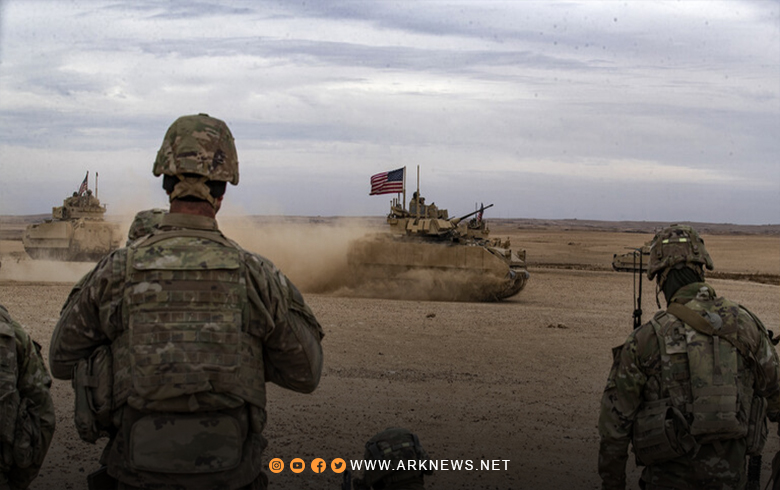
2. Targeting US headquarters and places of concentration in Syria by Shiite militias as a result of the tripartite meeting of the chiefs of staff of the three countries in the form of suicide operations or other forms of military which aims to destabilize the US presence in Syria, which may constitute the essence of military operations against US forces because the meeting of the three chiefs of staff is not to prepare for direct military confrontations with hostile parties
3. The escalation of military operations against the DSF and specifically against the YPG by pro-regime groups in the areas of Raqqa, Deir al-Zour, and Manbij.
4. The regime sought to dismantle the forces the DSF where the Syrian regime maintains strong allies within these forces, and able to move them to serve the interests of the regime and to the possibility of confrontations between the forces of the DSF themselves.
5. The regime sought to bring about an Arab Kurdish conflict, benefiting from the serious violations of the PYD in the Arab regions, especially Deir al-Zour and Raqqa where there are a lot of civilian casualties, and therefore the regime may train small groups and arming not only against the Kurds but against all the Kurds to establish a deep and long-term Kurdish conflict.
6. Increase the military escalation in Idlib without reaching a comprehensive attack in order to pressure on Turkey to accelerate the fight against the terrorist organization of Tahrir al-Sham and to keep Turkey in the Sochi alliance.
7. The regime may create a new terrorist organization or indirectly support dormant cells to keep its message in which it has succeeded in changing the international community's positions and priorities based on either "regime or terrorism".
These possible scenarios indicate the possibility that the conflict in Syria takes a new trend in the coming days.
27-3-2019
913