The 59th Anniversary of the Kurds' Deprivation of Syrian Nationality
ARK News… Tuesday coincided with the fifty-sixth anniversary of the exceptional statistics (since 05/10/1962), according to which more than “300 thousand” in the Jazira region were stripped of the Kurdish people in Syrian Kurdistan, of Syrian nationality, according to Amnesty International (Amnesty International) in 2011.
After the "Baath Party" seized power in 1963, it implemented policies aimed at Arabizing the names of Kurdish villages, towns, and cities, banning Kurdish culture from circulation, and prohibiting naming newborns with Kurdish names, in addition to implementing the "Arab Belt" project based on Law No. 75 issued in 1964, which stipulated that Hasaka be considered a border province. Accordingly, Kurdish farmers were prevented from owning agricultural lands, and the property was turned into a “benefit” under lease contracts between the Ministry of Agriculture and the farmer, according to which the latter pays rent in return for benefiting from his agricultural land, every year.
The intended exceptional population statistic was conducted in Hasaka Governorate, during the era of the President of the Republic, Nazim Al-Qudsi, and his Prime Minister, Bashir Al-Azhma. It took place on October 5, 1962, and divided the Kurds in Syria into:
- Have Syrian nationality.
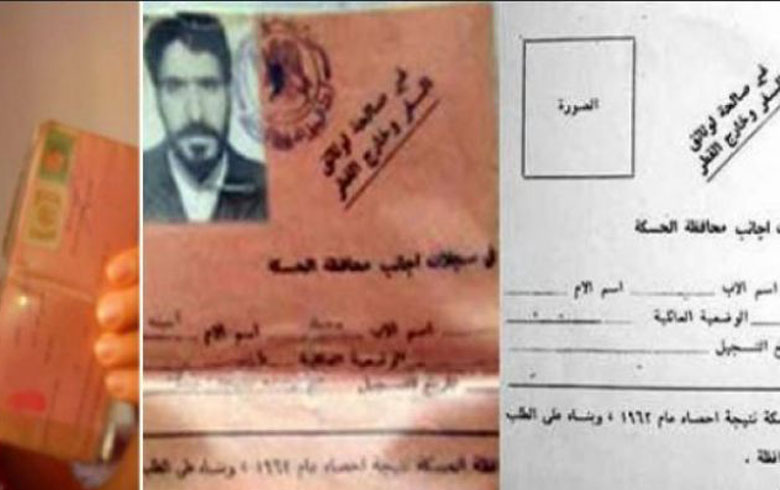
- Kurds are stripped of citizenship and registered in official records as foreigners.
- Deprived of citizenship, not registered in the official civil status records. They were called Maktoum-register, a Syrian administrative term that refers to the absence of the person concerned in the official records.
In addition to the previous category, “Al Maktoum” included:
Anyone born to a foreign father and a citizen mother.
Anyone born to a foreign father and a mother with a closed registration.
Whoever was born to parents who are not registered.
Under this arbitrary racist procedure, our people suffered from various types of discrimination and alienation inside Syria, which was manifested by depriving them of civil, political, and economic rights related to obtaining citizenship, such as the right to participate in elections, the right to work, employment, travel, registration of marriage and births, in addition to the right to property and the military service.
This inhumane situation affected the lives of the Kurdish majority in the daily suffering of poverty and unemployment, and despite the protests and continuous reviews by the victims and the demands of the Syrian civil society, and despite the continuous and repeated promises that the Syrian authorities made from time to time to solve this issue after they recognized its existence at the time, but this unjust suffering has continued, rather, it increased after the issuance of Legislative Decree No. 49 dated 9-10-2008, which stipulates that “it is forbidden to place any of the signs of lawsuits, mortgage, reservations, division and specialization on the property newspaper in the border areas, whether the property is within the organizational scheme of the city, or outside it.”
The National Organization for Human Rights in Syria had issued a statement in this regard in 2008, in which it stated, “The continuation of this suffering throughout its continuity without a solution is a clear violation of the Syrian Nationality Law, and all relevant international covenants signed and ratified by the Syrian government, not to mention the harmful effects on the fabric of Syrian society and its national unity.
It called on the Syrian authorities to "implement their promises to solve the problem of the deprived and the stateless, and demanded the concerned authorities work hard to cancel the results of this unjust census, the first of which is to restore citizenship to all stripped of it, and to compensate them for suffering and deprivation for a long time, which promotes national reconciliation and immunizes the country against any dangers or challenges.”
Syrian President Bashar al-Assad had issued Legislative Decree No. (49) to grant Syrian citizenship to Kurds registered in the records of foreigners in Hasaka Governorate and instructed the Minister of Interior to make decisions that include the executive instructions of this decree, after the outbreak of the Syrian revolution in 2011 in a move to win the Kurds’ affection towards him and weaken his opponents, but the majority of the Kurdish people had already decided their position after 5 decades of the rule of the Baath and the Assad family in Syria, and even after the naturalization of "foreigners of Hasaka province", Assad was not able to change their position and win the absolute majority of the Kurdish people in Syrian Kurdistan.
Naturalization alone was not sufficient in the aspirations of the Kurds, as the damage and deprivation left by this decision did not and will not end with that card, neglecting to compensate them for their natural and legitimate rights.
The Kurds had risen up in Qamishlo in 2004 in the face of the tyranny and oppression of the Baath, and presented dozens of martyrs, hundreds of wounded and thousands of detainees, as a result of their revolution, which shook the pillars of the regime for the first time in Syria and broke the barrier of fear and silence prevailing in the country.
As soon as the spark of the revolution erupted in the first week, Kurdish youth joined in the thousands and then tens of thousands throughout the Kurdish regions in Syria, and they still pay an expensive tax in their goal and right to restore the Kurdish rights of the Kurds in Syrian Kurdistan, and they demand the federation of Syrian Kurdistan.
916