The Fourth Division: Maher al-Assad’s Empire That Drained Syria’s Economy to the Last Drop
ARK News.. From its headquarters in rugged hills overlooking Damascus, the infamous Fourth Division—Maher al-Assad’s empire—bled the Syrian economy dry, looting and depleting its resources to the very last drop.
Following the fall of the Assad regime, many of the division’s notorious military bases, long feared across Syria, were ransacked. However, scattered documents within these abandoned sites reveal the extravagant lifestyle and vast wealth enjoyed by "Sayyida Al-Mu'allim" (Master Teacher)—a title referring to Maher al-Assad—and his inner circle, while many of his soldiers struggled to feed their families, some even resorting to begging.
A trove of documents reviewed by Agency France-Presse (AFP) at several of these now-deserted locations unveils the vast economic empire Maher al-Assad and his network of beneficiaries built—one that extended into every sector imaginable, from the production and trafficking of Captagon to imposing levies at border crossings and military checkpoints.
Western governments have long accused Maher al-Assad and his associates of turning Syria into a "narco-state," flooding the Middle East—particularly the Gulf region—with illicit Captagon pills, a trade estimated to be worth over $10 billion.
However, beyond the drug trade, the documents examined by AFP expose how deeply the Fourth Division infiltrated Syria’s economic structure, operating more like a privileged mafia within a rogue state.
The division seized homes and farmlands, confiscated various goods—including food supplies, cars, and electronics—for resale, and stripped copper and metals from war-ravaged areas.
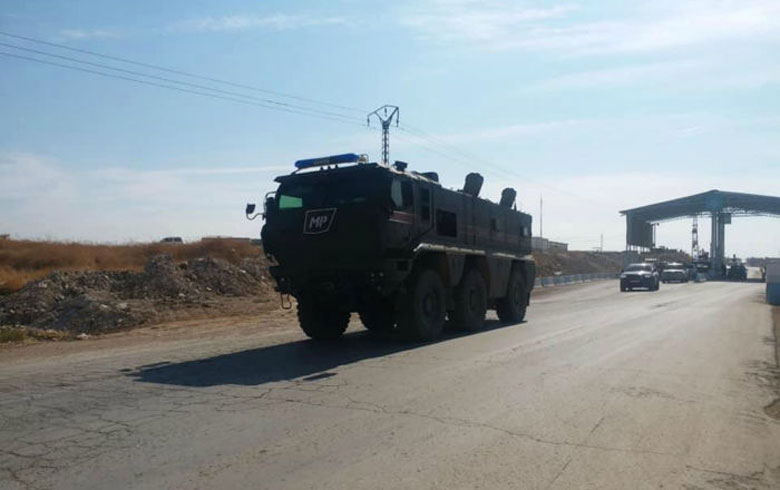
It also imposed fees at checkpoints, profited from escorting and protecting oil tankers—even those coming from jihadist-controlled areas—and monopolized the trade of tobacco and metals.
Tunnels and Safes
At the heart of this corrupt network stood Maher al-Assad’s private headquarters, built above a maze of tunnels carved into a mountain overlooking Damascus, some large enough to accommodate trucks.
A masked guard from the new Syrian administration led AFP journalists through these tunnels, acting as a tour guide while pointing out a bathroom here, a bedroom there, and what seemed to be emergency exit routes.
Descending 160 steep steps, the team reached sealed-off rooms secured with reinforced steel doors.
The guard claimed to have counted nine safes in one of the rooms.
According to him, these safes were "broken into" and looted on December 8—just hours after opposition factions, led by Hay’at Tahrir al-Sham, overthrew the Assad family's rule, ending over five decades of authoritarian rule.
According to a senior Iraqi official and two Syrian sources, Maher al-Assad (58) was unaware that his brother Bashar was planning to flee to Russia. He escaped separately, taking a helicopter to Iraq before allegedly traveling to Russia via Iran.
Inside the underground complex, chaos was evident—pried-open safes, empty Rolex and Cartier watch boxes scattered everywhere. It remains unclear whether the safes had been emptied before the looting.
The guard pointed to an office he described as "Maher al-Assad’s main office," a two-story structure above ground with tunnels underneath, housing locked rooms "that cannot be opened."
Near an abandoned safe in one of the corridors, a heat-sealing machine—presumably used for packaging stacks of banknotes—was left behind.
Hidden Fortunes
Among the scattered documents reviewed by AFP inside an abandoned security office of the Fourth Division, one detailed expenditure report listed cash reserves as of June 4: $80 million, €8 million, and 41 billion Syrian pounds.
Hundreds of similar documents indicate that Maher al-Assad and his security office maintained comparable cash reserves between 2021 and 2024.
"This is just a small sample of the wealth that Maher and his associates accumulated through their illicit dealings," said Khader Khaddour, a researcher at the Carnegie Middle East Center.
He estimated that their real fortunes were hidden "abroad, likely in Arab and African countries."
"The Fourth Division was essentially a money-printing machine," Khaddour added, noting that this was happening in a country where, according to the UN, over 90% of the population survives on just two dollars a day.
A State Within a State
Western sanctions failed to curb Maher al-Assad and his men or diminish their influence throughout the war years.
"The Fourth Division was an independent state—it controlled everything," said Omar Shaaban, a former brigadier general in the unit who later reconciled with Syria’s new administration.
Although dealing in U.S. dollars was banned in Syria, "many security officers amassed fortunes, with safes and cash holdings exclusively in U.S. dollars," he added.
Maher’s close associates lived in luxurious palaces, frequently importing high-end cars, while outside their gated mansions, the rest of the country sank into poverty, despair, and fear.
Even weeks after Assad’s fall, Syrians continued to visit Maher al-Assad’s villa in the upscale Ya’four district, searching for valuables amid the abandoned stables where his award-winning daughter used to ride horses.
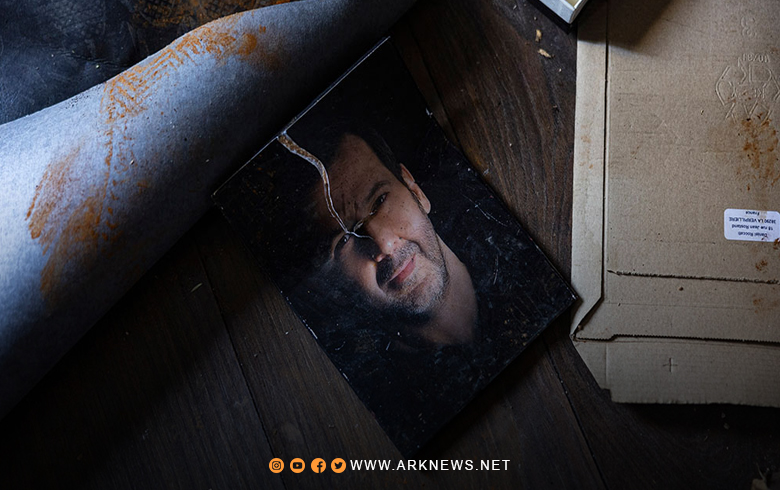
Inside the ransacked palace, a man desperately asked the AFP team, "Where is the gold?" But all he found were scattered old photographs—including one of Maher, his wife, and their three children.
The "Invisible Man"
Maher al-Assad has long been a shadowy and feared figure in Syria, known as the man responsible for carrying out the regime’s "dirty work."
Although his portraits adorned every Fourth Division base, he rarely appeared in public.
Despite being accused by rights groups of ordering the killing of unarmed protesters since 2011 and being linked to assassinations, he remained "the invisible man," according to a source close to the Assad family who spoke to AFP.
"You will find very few people who can claim to know him personally," the source added.
In a February interview with Saudi Arabia’s Al Arabiya network, Majid Jad’an—the sister of Maher al-Assad’s wife, who fled Syria in 2008 due to disputes with him—described Maher as generous and sometimes pleasant company. But, she added, "When he got angry, he completely lost control of his actions and words, which was terrifying."
The Fourth Division, under his command, was the regime’s iron fist, responsible for countless atrocities.
After the war erupted, Jad’an told a French broadcaster, "Maher knows how to destroy, how to kill, and how to lie to appear innocent," comparing his ruthlessness to that of his late father, Hafez al-Assad.
1450