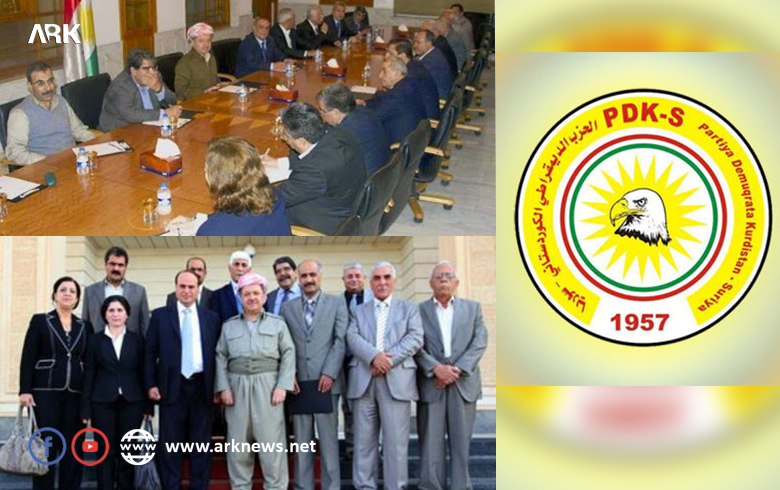
Political Bureau of PDK-S: "We are ready for a serious dialogue under the auspices of President Masoud Barzani"
Political report of the Kurdistan Democratic Party - Syria for the month of January
ARK News: The Political Bureau of the Kurdistan Democratic Party - Syria, PDK-S, issued its political report for January 2020, in which it addressed several issues at the Syrian level and Syrian Kurdistan, and expressed its position regarding the arrangement of the Kurdish class, saying: “We are ready for a serious dialogue under the auspices of President Masoud Barzani”. ARK Media Foundation received a copy of the report stating:
International diplomacy is still seeking to develop appropriate solutions to the general crisis in the region, including the protracted Syrian crisis, amid severe political and military conflicts, and through understandings as well, and it appears clearly between some of the active and interacting forces with the Syrian issue, as if efforts are moving towards preparation through careful arrangement and coordination on the ground first, after which political agreement will come from behind the scenes and corridors of forums, which means that the present forces on the Syrian territories play a game of role distribution, even in a relative manner, and within the limits of what protects its agendas and future interests.
There are those who believe that America is hesitant in its stances and endeavors, and has never seen the launch of the field for the Russian Federation in the Syrian issue, despite knowing the relationship and coordination of the latter with the Syrian regime, however, the evidence clearly indicates the emergence of the features of the broad American strategy in the region as a whole, even if its effectiveness is relatively slow, this is evident in its position on the region's overall crises, including the Libyan, Yemeni, and Iraqi crises up to the Syrian crisis, it seems that it is strengthening its presence on the Syrian lands despite its announcement more than once to withdraw from it, and thus in Iraq, as it seems that it will not withdraw from neither Syria nor from Iraq, and its presence will be in this or that way, it will not leave the sources of oil and gas in Syria and in Iraq, and it will not leave the latter to be unique to Iran.
In Syria, its endeavors are continuing on the political track through the United Nations, its resolutions 2254 and 2118, and the reference to the Geneva Declaration 1 up to the Constitutional Committee, through attempts to achieve a ground for negotiation between the regime and the opposition, and on the ground by sticking to the areas east of the Euphrates and working with the concerned parties with what is Russia and Turkey, in order to arrange the situation on the one hand, whether in the Kurdish or other regions, and to monitor factors or attempts to obstruct work on the ground or obstruct diplomatic efforts towards achieving a political solution to the crisis of the country, in this context, it claims that it will spare no method to pressure the regime and its tools, including the economic aspect, to deter the regime and its acceptance of the appropriate and desired political solution to the Syrian crisis by implementing the aforementioned Security Council resolutions and the outputs of the Geneva Conference 1 of the Working Group for Syria June 30, 2012.
As for Turkey, it is still playing its game between Russia and its traditional allies, (America, European Union countries, etc.) and has spared no effort to deepen and expand its regional extensions, either with the Arab side (Qatar, Libya ...) or with some countries of the former Soviet Union, especially the Islamic ones, or that speak Turkish, and did not hesitate to achieve progress in its understandings with its traditional allies as we mentioned, this is in addition to the Russian efforts to reform the same between (Turkey and the Syrian regime). The Turkish retreat from its sharp positions against the Syrian regime encouraged the Russians to carry out reconciliation efforts between the two sides, and to return to activating the Adana Security Agreement between the two parties in 1998, except that there are many obstructions and obstacles in front of those endeavors, and at the forefront of which is the issue of the Syrian Muslim Brotherhood Movement, as Turkey does not accept extradition from its leaders to Syria, nor does the regime accept reconciliation with that movement, unless the implementation of that agreement is unilateral, which is the side of the Syrian regime, or that the understanding is carried out in a phased manner and for immediate tasks.
As for Iran, it is facing severe negative situations and major challenges, inside the country the movement of mass protests continues, especially young people and women, and therefore the general public, especially the classes that live below the poverty line, as well as the movement of political opposition and the struggle of powers and other national affiliations (Kurds, Azeris, Ahvaz and others) as well on the economic crisis, and international pressure through more economic and political sanctions, and, most recently, the American devastating strike to liquidate important figures in the Iranian agenda at Baghdad International Airport, including Qassem Soleimani, commander of the Quds Force and Abu Mahdi Al-Muhandis and others, which made Iran in front of a possible military confrontation with the international coalition and in the forefront of the United States of America, meaning that Iran has two options that do not third for them, either by changing its behavior by changing its strategy in dealing with international affairs and its interventions in the affairs of the countries of the region, or it is before a stage in which it may go to an unknown fate.
As for Iraq, it is facing many difficulties, whether in terms of the movement, the continuous mass protests despite the government's resignation, or the suffering of citizens due to the deterioration of economic conditions and the decline in the level of public basic services, the scarcity of resources and living materials, and the purchasing power of the broadest social sectors and sectors, and instead of responding to the calls and demands of the protesters, securing social life, and correcting the political relations between the various national and religious blocs and affiliations, instead of all of that, the Iraqi Parliament deliberately created a wide rift between them by the uniqueness of the Shiite blocs with the decision to leave the foreign forces, meaning the American forces, this means that the Shiite group is biased towards Iran, and spread anxiety among other components, especially the Sunni component, which raises its fears for its political, social and sectarian future, so that it also moves towards demanding a form of the self-entity to ward off the risks to it, especially since this decision does not bear the constitutional nature, because Political decisions of this level of importance should be achieved by consensus between the basic components, and not like other decisions, which means that parliament must reconsider and cancel its decision, or go the country to results that may not serve Iraq, its unity, and its political, social and economic future.
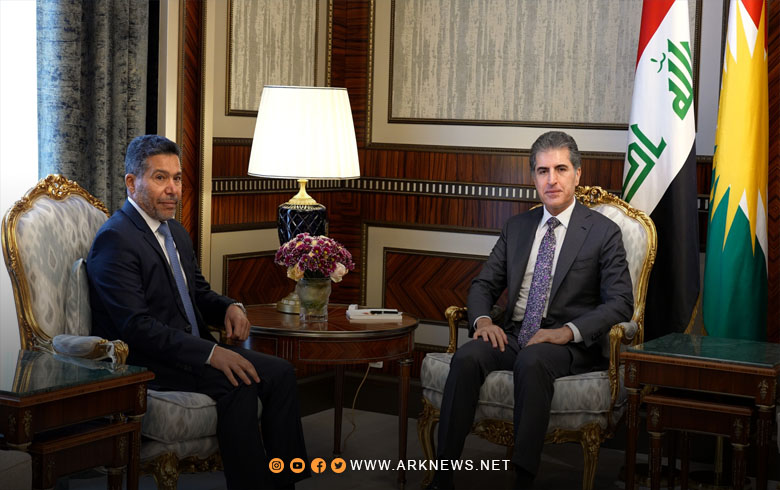
As for Kurdistan Region, it is living with its three presidencies (the region, government and parliament) in a state of political and economic stability, and quietly practicing the implementation of its programs and plans towards further progress and development, and seeks to promote good-neighborly relations and strengthen the relationship with friendly countries, and the continuous openness to the free world in the pursuit of closer relations with it, the features of these endeavors were manifested by the recent Davos summit and the presence of the region's struggling president, Nechirvan Barzani, in a distinct and remarkable way, but the recent decision of the Iraqi parliament to leave the foreign forces (the intended US) has aroused everyone's anger, where the region leadership appealed to the Iraqi parliament to reverse its decision, and saw the necessity of the presence of American forces in Iraq and for its benefit, but the parliament is still persistent in its decision, despite its firm knowledge of the consequences and negative consequences and their repercussions on the general Iraqi situation, but the decision despite its negativity has resulted in important aspects, from Most notably, achieving a new alignment between the blocs and political affiliations, including contributing to strengthening the relationship between the Kurdish blocs that have confirmed for themselves the truth of what is happening behind the scenes.
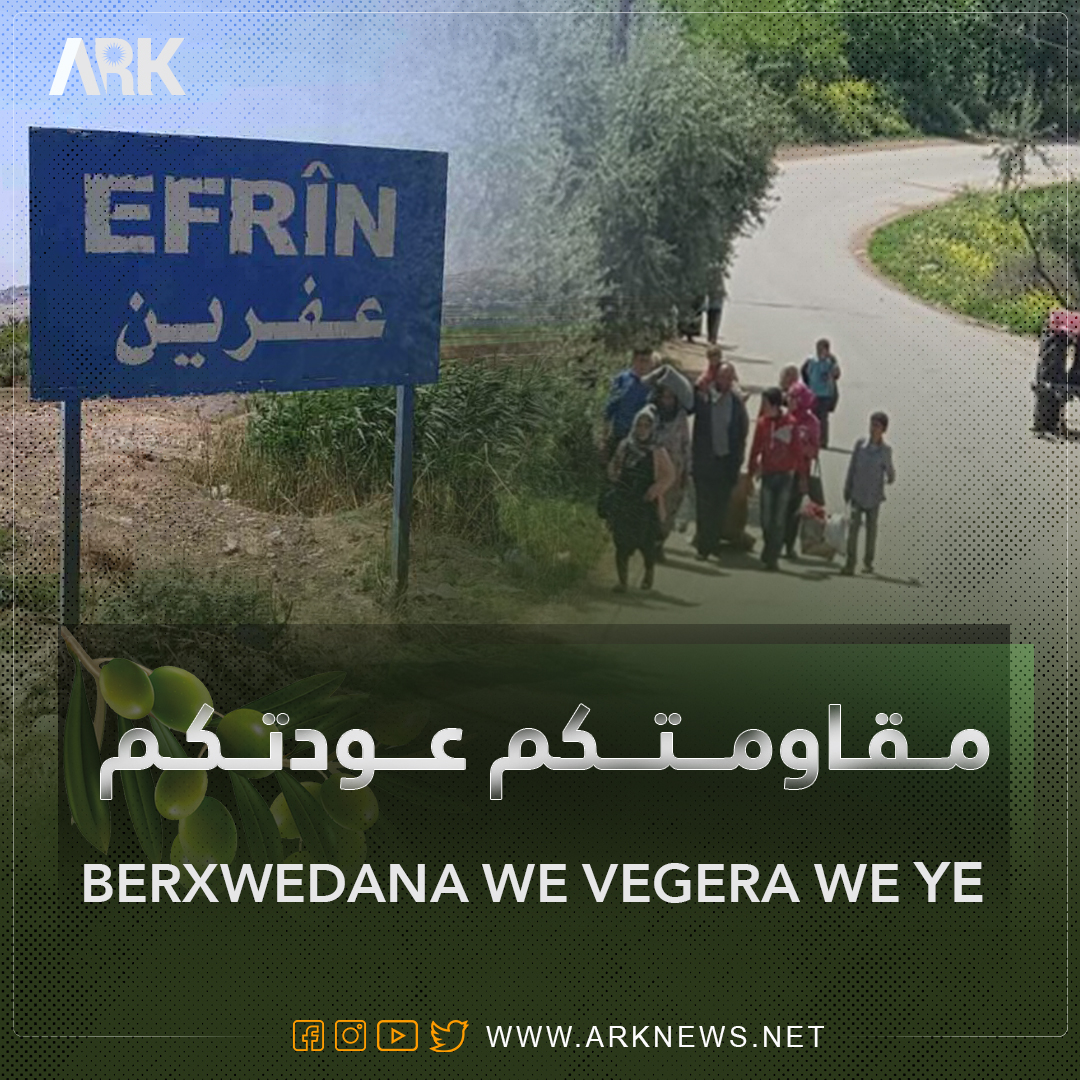
As for Syrian Kurdistan, the tragedy and suffering of our Kurdish people is still ongoing (in Afrin, Gire Spi, and Sari Kaniye) due to the Turkish invasion and the violations practiced by armed racist factions affiliated with Turkey and the opposition, from looting, robbery, theft and robbery to homes and shops, in addition to targeting individuals with abuse, arrest and kidnapping in front of observatories for human rights committees, civil society institutions and even the international community, in this context, the leadership of the Kurdish National Council in Syria, represented by the presidency and the Foreign Relations Committee, made efforts and endeavors with some international bodies in this regard, and the Council, along with the National Coalition for the Syrian Revolution and Opposition Forces, reached an agreement to form joint committees to work and do some tasks that would prepare the way for the return of the displaced and displaced persons to their homes and places of residence, and another for the survey of the areas of demographic change in order to identify them and work to remove it and prevent its continuation, and to participate in the work of the committees is worthy elements from the people of the concerned regions, in short, seeking to alleviate or eliminate the tragedies and suffering of citizens in those areas.
On the level of calls or initiatives on the unity of the political position and the joint Kurdish discourse, the latest of which is the initiative of the military figure, Mr. Mazloum Abdi, the position of our party (the Kurdistan Democratic Party - Syria) is not at all different from the position of the Kurdish National Council, but rather it is part of it, and accordingly the Council announced its positive attitude towards that invitation, and it expressed its readiness for serious and meaningful dialogue and under the auspices of the past agreements sponsor, President Masoud Barzani, and with the guarantee of a friendly international party that takes into account the interests of our Kurdish people and serves the just cause of our people.
Political Bureau
Of the Kurdistan Democratic Party - Syria
Qamishlo 31/1/2020
745