The National: U.S. Mission in Syria to Focus on Training and Logistical Support for Government
ARK News.. According to The National, the U.S. military mission in Syria is set to be limited to training and providing logistical support to the Syrian government, marking a further reduction of American forces amid rising tensions with Iran.
Sources cited by The National indicate that the U.S. now maintains only a single main military base in Syria, located in Rmelan near the Iraqi border. The number of U.S. troops has declined significantly compared to 2024, when it was estimated at around 2,000 personnel, though the current figure has not been disclosed.
The report highlights that the American role has shifted from supporting Syrian Democratic Forces against ISIS to training the newly formed government forces and providing logistical aid. Security sources told The National that this drawdown may also reduce the risk of Iranian retaliation, especially amid recent escalations between Washington and Tehran.
The sources noted that the U.S. “doesn’t need many bases, making them harder to defend,” while Iran continues to exert influence through its proxies in neighboring Iraq.
160



Kurdistan Region Prime Minister Extends Ramadan Greetings to Muslims Worldwide
ARK News.. Masrour Barzani, Prime Minister of the Kurdistan Region, on Tuesday, February 17, 2026, extended his congratulations to Muslims on the occasion of the holy month of Ramadan.
Below is the full text of his message:
On the occasion of the blessed month of Ramadan, we extend our warmest congratulations and sincerest blessings to all Muslims in Kurdistan, Iraq, and across the world.
As we welcome this holy month, we pray to Almighty God to make it a month of goodness, blessing, peace, tranquility, and mercy for all humanity, and to accept everyone’s fasting, prayers, and acts of worship.
Masrour Barzani
Prime Minister of the Kurdistan Region
190

Kurdistan Region President Extends Ramadan Greetings to Muslims Worldwide
ARK News.. Nechirvan Barzani, President of the Kurdistan Region, on Tuesday, February 17, 2026, extended his congratulations to Muslims on the occasion of the holy month of Ramadan.
Below is the full text of his message:
On the occasion of the blessed month of Ramadan, I extend my warmest congratulations and blessings to Muslims in the Kurdistan Region, Iraq, and around the world. I hope this holy month brings goodness, blessings, and stability to the people of Kurdistan and to all the peoples of the region.
Let us take this religious occasion as an opportunity to deepen the spirit of tolerance, harmony, and coexistence, which has always been the beautiful identity of Kurdistan.
We pray to Almighty God that this month marks the beginning of an end to pain and hardship, and that the message of peace and harmony prevails throughout the world.
Ramadan Mubarak to all. Wishing you a year filled with happiness and prosperity.
Nechirvan Barzani
President of the Kurdistan Region
February 17, 2026
177

Marco Rubio: U.S. Prevented Syria’s Fragmentation by Choosing to Work with the Government
ARK News.. U.S. Secretary of State Marco Rubio said Washington opted to work with Syrian authorities rather than allow the country to descend into fragmentation and chaos, describing the decision as the most realistic path to preventing the resurgence of ISIS and avoiding a prolonged civil war.
Speaking at a joint press conference with Slovak Prime Minister Robert Figo in Bratislava, Rubio stated that the United States had faced two options regarding Syria.
“The first option was to allow Syria to break apart into multiple entities, which would likely have resulted in a long-term civil war, mass migration, a security vacuum, the return of ISIS, and renewed Iranian influence,” he said.
He explained that the second option involved engaging with Syrian authorities under the leadership of President Ahmed al-Sharaa to manage a transitional phase aimed at preventing total state collapse.
Rubio noted that the U.S. administration chose the second option “because it was the most logical,” while acknowledging that the path forward would not be easy. “We knew there would be difficult and concerning days,” he said, adding that some moments had been “deeply worrying.”
Despite the challenges, Rubio affirmed that Washington remains satisfied with the current course and stressed the importance of maintaining it.
164

President Barzani and Hungarian Ambassador Discuss Developments in Syria
ARK News.. President Masoud Barzani received Osama Ibrahim Naff’a, Hungary’s Ambassador to Iraq, on Monday, February 16, 2026, at the Salahuddin resort (Pirmam).
During the meeting, the Hungarian ambassador conveyed the greetings of Hungary’s President and Prime Minister to President Barzani, reaffirming Budapest’s interest in strengthening and expanding relations with the Kurdistan Region across various sectors.
President Barzani welcomed the ambassador and expressed his support for broadening cooperation and deepening ties between the Kurdistan Region and Hungary.
The discussions also addressed the continuing threat of terrorism and the risks associated with a possible resurgence of the Islamic State (ISIS), underscoring the importance of international coordination to prevent extremist groups from re-emerging in the region.
In addition, the two sides reviewed the latest developments in Syria, as well as ongoing political developments in Iraq.
173
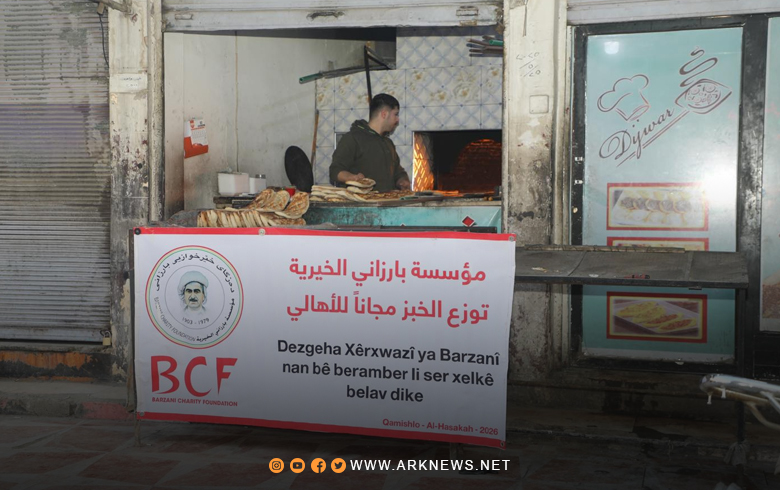
Barzani Charity Foundation Launches Free Bread Distribution Initiative in Qamishlo
ARK News.. The Barzani Charity Foundation has announced the launch of a “Free Bread Distribution” project for residents of Qamishlo in Syrian Kurdistan.
In a statement posted on its official Facebook page on Monday, February 16, 2026, the foundation confirmed that the initiative has officially commenced in Qamishlo. During the first phase, seven tons of flour are being processed daily across three government-run bakeries, with bread distributed free of charge to local residents.
The foundation added that the second phase of the project will expand to include seven privately operated bakeries, further increasing daily distribution capacity.
Earlier, on February 11, 2026, Karzan Nori, a member of the foundation’s administrative board, announced the initiative during a press conference held in Qamishlo. He stated that the organization had secured 200 tons of flour for the city’s bakeries.
According to Nori, the project aims to distribute approximately 480,000 bundles of bread—equivalent to 3,360,000 individual loaves—over the coming period. The foundation plans to provide 10,000 bread bundles per day, free of charge, to displaced families, affected residents, and vulnerable households for a duration of 48 days.
The initiative is intended to ease mounting economic pressures on residents amid ongoing humanitarian challenges in the region.
193
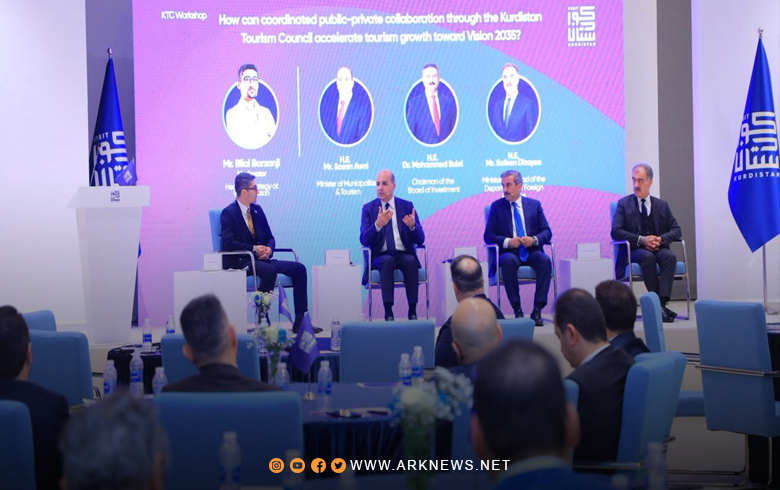
Launch of Kurdistan Tourism Council Aims to Unify Efforts and Boost Sector Growth
ARK News.. A formal ceremony was held on Monday, February 16, 2026, in Erbil, the capital of the Kurdistan Region, to announce the establishment of the Kurdistan Tourism Council. The event was attended by senior officials from the Kurdistan Regional Government (KRG).
The newly formed council seeks to unify efforts and advance the tourism sector by strengthening coordination between the public and private sectors.
In remarks delivered during the ceremony, Sasan Awni, Minister of Municipalities and Tourism, described the council as a “strong bridge of communication” aimed at aligning future visions and expanding the promotion of the region’s tourism sector at local, regional, and international levels.
Awni stated that the initiative reflects the vision of Prime Minister Masrour Barzani and aligns with the strategy of the ninth ministerial cabinet, which considers tourism a key pillar for revitalizing the national economy.
He noted that, for the first time, the Kurdistan Region enacted a dedicated Tourism Law (Law No. 9 of 2022), providing a legal framework to support sector development.
Highlighting key figures, Awni revealed that the region is home to more than 3,000 tourism sites and facilities, employing over 20,000 people—80 percent of whom are local workers.
He also announced the establishment of four new general directorates of tourism in Halabja Province and in the independent administrations of Zakho, Soran, and Rania (Raparin).
According to Awni, 80 major tourism projects have been implemented, with total investments exceeding $7.5 billion.
Concluding his remarks, the minister emphasized that the Kurdistan Regional Government has provided numerous legal, financial, and logistical incentives to the private sector and continues to encourage investors to channel capital into tourism.
He expressed hope that the newly established council will serve as a significant catalyst for further growth in this strategic sector.
194
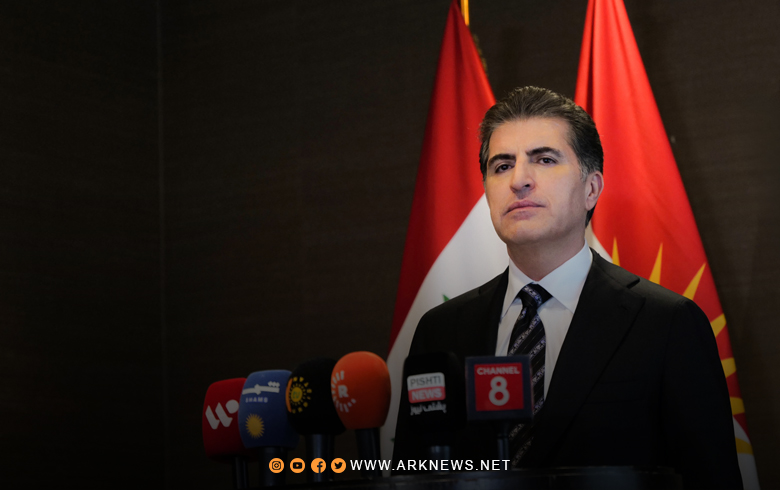
Nechirvan Barzani Concludes Participation in Munich Security Conference
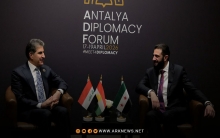
ARK News.. Nechirvan Barzani concluded his participation in the Munich Security Conference on Sunday, February 15, 2026, after three days of intensive meetings with heads of state, prime ministers, foreign ministers, and senior officials from the U.S., Europe, and the broader Middle East.
During his meetings with Emmanuel Macron, Ilham Aliyev, and prime ministers of the Netherlands, Qatar, and Lebanon, as well as other senior leaders, Barzani reaffirmed the Kurdistan Region’s consistent role as a stabilizing force and a guarantor of security in the region. Discussions also covered Iraq’s political situation, developments in the Kurdistan Region, and regional dynamics.
Regarding Syria, one of the main agenda items, Barzani emphasized the importance of safeguarding the rights of Kurds and all other components in a future unified Syrian constitution, ensuring lasting peace and stability.
In a press conference, Barzani stated: "As every year, we participated in the Munich Security Conference and met with many international leaders. This year, the primary focus was on Syria and the formation of Iraq’s new government. We highlighted Kurdistan Region’s role as a stabilizing factor and affirmed our commitment to support efforts in Syria and Iraq. Regarding Kurdistan, it is clear that international stakeholders want a stable and strong Kurdistan within the framework of federal Iraq, and we discussed challenges with Baghdad."
On the ongoing peace process in Syria, Barzani explained: "Our position in the Kurdistan Region is to support the current process—the dialogue between the SDF and the Syrian government. We also want other Kurdish parties, such as the Kurdish National Council, to participate in the ongoing political dialogue with Damascus. We must be realistic, and I believe that the current agreement is good given the circumstances. Kurdistan Region continues communication with both Turkey and Syria. Our policy is to ensure the agreement is implemented fully, restoring security and stability. Most importantly, the rights of Kurds and all other communities must be enshrined in the future Syrian constitution. This will give confidence to all parties. Our message is that all parties should reach an agreement within a unified Syria; this is Kurdistan Region’s policy."
This statement highlights Nechirvan Barzani’s consistent commitment to regional stability, supporting Kurdish participation in Syria’s political process, and ensuring the protection of minority rights within a unified state.
Barzani described the ongoing Turkish peace efforts as serious and constructive, acknowledging the efforts of all parties involved: "We see this as a serious process, and Turkey is committed to resolving the issue. The process may be slow, but the important thing is that all parties remain committed to its success. Kurdistan Region appreciates the efforts of everyone involved, particularly Mr. Devlet Bahçeli and Mr. Abdullah Ocalan, and we hope it reaches a positive outcome. The PKK must follow the demands set by President Ocalan. We support this process and thank all participants, especially President Erdogan, who personally supports the effort to achieve good results."
On the internal political stalemate, Barzani noted progress: "Indeed, the Kurdistan Region has faced political stagnation. However, recent meetings between myself and Mr. Bafel Talabani were positive and successful. Though no final agreements have been reached yet, we are on the right track to achieve outcomes beneficial to both Kurdistan Region and Iraq."
Regarding Rojava, Barzani emphasized opportunities for a political solution while respecting local autonomy: "There is a chance for resolution. The model must be agreed upon by the Kurdish parties and Damascus. By this, I mean the SDF, the Kurdish National Council, and other parties. For example, the decree issued by President Ahmed al-Sharaa for Hasaka governorate is important, as the city includes both Kurds and Arabs. Now the Kurdish side has an opportunity to ensure the governor represents all communities, providing services fairly. This requires structured dialogue. We encourage the SDF and other Kurdish actors to engage seriously in Syria’s political process. The capital is Damascus; efforts must be made to solve issues within a unified Syria."
Barzani also highlighted the importance of implementing the existing agreement in Rojava and the international support behind it: "The intention to resolve problems exists on both sides. Europe and the U.S. have played a positive role, and President Macron contributed significantly to reaching this agreement. While the agreement may not cover all desires, given the circumstances in Rojava, it represents a meaningful achievement. Kurds must support it and work diligently to ensure its implementation."
Barzani addressed the people of Rojava, affirming solidarity and the need for reconstruction and prosperity: "We miss Qamishlo and Afrin, and these visits will be part of our program. Our message to our brothers and sisters in Rojava is one of pride and support after difficult times. The current agreement must be implemented, and reconstruction, welfare, and progress will follow, bringing happiness and success to our people in Rojava."
164

Marco Rubio: Progress in Syria So Far “Very Positive”
ARK News.. Marco Rubio, the U.S. Secretary of State, said that developments in Syria to date have been “very positive,” stressing that the country’s current trajectory is far better than it had been previously.
Speaking at a press conference on Sunday, February 15, 2026, Rubio stated that U.S. President Donald Trump had called for a ceasefire in northeast Syria to allow for the transfer of ISIS detainees out of the country and to provide time for the integration of the Syrian Democratic Forces (SDF) into Syrian state institutions.
Rubio acknowledged that implementing the integration agreement “will not be easy, but it must happen regardless,” emphasizing the importance of carrying out the agreement between the Syrian authorities and the SDF despite expected challenges.
He also highlighted the need to reach further understandings with other components of Syrian society, including Druze, Bedouins, Alawites, and others, in order to ensure stability and advance the settlement process.
The U.S. Secretary of State concluded by saying that Syria is moving in the right direction, despite what he described as “difficult and concerning days” along the way.
122

Nechirvan Barzani: Kurdistan Region a Pillar of Stability and Security in the Middle East
ARK News.. Nechirvan Barzani, President of the Kurdistan Region, affirmed that the Kurdistan Region represents a fundamental pillar of stability and security in the Middle East, stressing that political solutions and dialogue remain the only path to resolving outstanding crises in Syria and securing a peaceful future in Turkey.
On the sidelines of the 2026 Munich Security Conference, Barzani reiterated during a press conference on Sunday, February 15, 2026, the Region’s support for dialogue between the Syrian Democratic Forces (SDF) and the Syrian government. He emphasized that “enshrining the rights of the Kurds and all components in the Syrian constitution is the only guarantee for achieving sustainable security.”
Barzani called on Kurds in Syrian Kurdistan to seriously engage in the political process, noting that the “Hasaka Governorate model” could present an opportunity to demonstrate the success of joint local administrations within the framework of a unified Syria.
Regarding political developments in Turkey, he described recent initiatives as “a very serious process,” praising the efforts of Turkish leaders and the recent messages of peace. He affirmed that the Kurdistan Region strongly supports this path, expressing confidence that ending conflicts through political solutions would transform the region economically and in terms of security.
On domestic affairs, Barzani reassured the Kurdish public about relations between the Kurdistan Democratic Party (KDP) and the Patriotic Union of Kurdistan (PUK), describing his meetings with PUK leader Bafel Talabani as positive and productive. He noted that efforts are ongoing to unify the Kurdish position to strengthen the Region’s standing in Baghdad and safeguard the rights of its citizens.
Concluding his remarks, Barzani revealed that there is genuine international will — particularly from France, Germany, and the United States — to see a strong and stable Kurdistan Region within federal Iraq. He added that world leaders recognize that “the security of Erbil is an integral part of the security of the international system.”
296