Masrour Barzani: Kurdistan Region Is Not Part of Any Conflict and Remains Committed to Peace
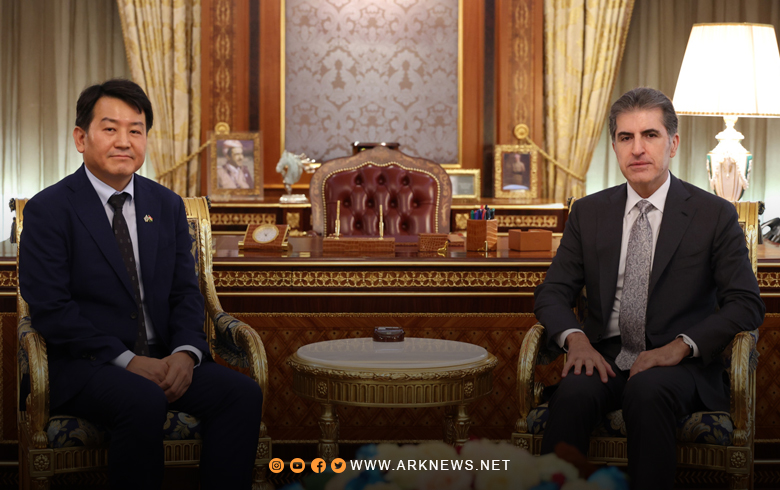
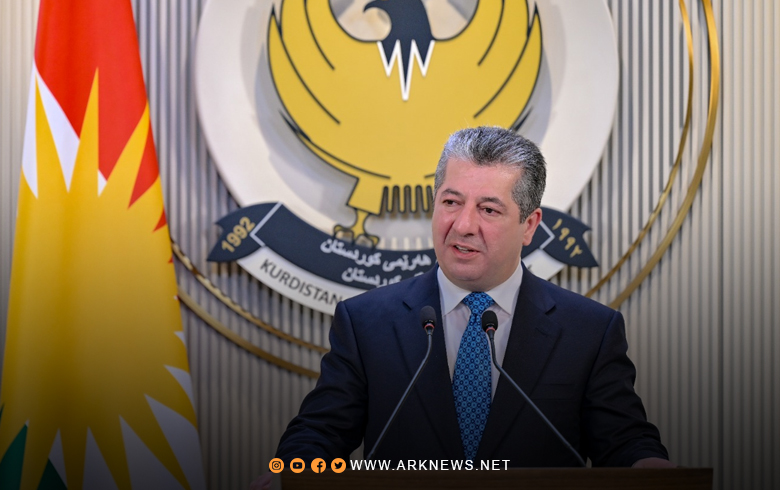
ARK News.. Kurdistan Region Prime Minister Masrour Barzani held a press conference on Monday, July 27, 2026, outlining the Kurdistan Regional Government's positions and initiatives on key political, economic, security, and public service issues, including the fuel crisis, relations with Baghdad, and the ongoing political deadlock.
Opening the conference, Barzani addressed regional tensions, stressing that the Kurdistan Region is not part of any conflict or war in the region and remains committed to promoting peace. He also condemned the repeated attacks targeting the region without justification.
He praised the resilience of the people of Kurdistan in enduring the economic hardships and regional crises affecting the Middle East, saying the region had overcome greater challenges in the past and would emerge stronger through unity between the government and its people.
Barzani reaffirmed the Kurdistan Region's support for the new Iraqi government led by Ali al-Zaidi, backing its efforts to implement reforms and combat corruption. He noted that the closure of the Strait of Hormuz had triggered an economic crisis affecting both Iraq and the wider region, emphasizing the region's readiness to cooperate fully with Baghdad to mitigate its impact.
He said the Kurdistan Region had fulfilled all of its obligations but argued that Baghdad's decision to deduct IQD 120 billion per month from the region's domestic revenues should be reconsidered, given the decline in commercial activity and local income. He called on the federal government to review the measure to ensure the timely payment of salaries. Barzani also announced that technical and administrative solutions regarding the ASYCUDA customs system were nearing completion to facilitate trade.
The Prime Minister urged all political parties to place national interests above partisan considerations, renewing his call for dialogue and the reactivation of the Kurdistan Parliament.
"The Parliament belongs to the people and must not become a hostage in the hands of any party to obstruct government formation or prevent the delivery of public services," he said, reaffirming the Kurdistan Democratic Party's commitment to cooperation in forming a new cabinet that meets citizens' expectations.
On the energy sector, Barzani explained that oil production costs in the Kurdistan Region are borne by the Region and its partner companies under existing contracts, while Baghdad allocates billions of dinars in sovereign spending to subsidize fuel prices in other Iraqi provinces, from which the Region does not benefit.
He added that Iraq allocates one million barrels of oil per day for domestic consumption and that the Kurdistan Region's constitutional share of 12.6% entitles it to 126,700 barrels per day. However, previous governments limited the region's allocation to 50,000 barrels per day. He called on Baghdad to provide the remaining 70,000 barrels as the region's official share, saying this would help reduce fuel prices and meet public demand.
Barzani also announced that he had instructed the Ministry of Natural Resources to regulate fuel prices, setting the maximum price of subsidized government gasoline at IQD 750 per liter and regular commercial gasoline at IQD 850 per liter, while reviewing the prices of premium and super-grade gasoline in coordination with the relevant authorities.
He further reaffirmed the government's commitment to providing 24-hour electricity through the Ronaki Project, explaining that the recent reduction in power supply resulted from Dana Gas temporarily cutting gas production at the Khor Mor field due to urgent security concerns. He said discussions with the company and relevant authorities are ongoing to restore full production capacity and increase electricity generation.
33