Mohammed Ismail Marks Qamishlo's Centenary with Message Celebrating Its Diversity and Shared Heritage
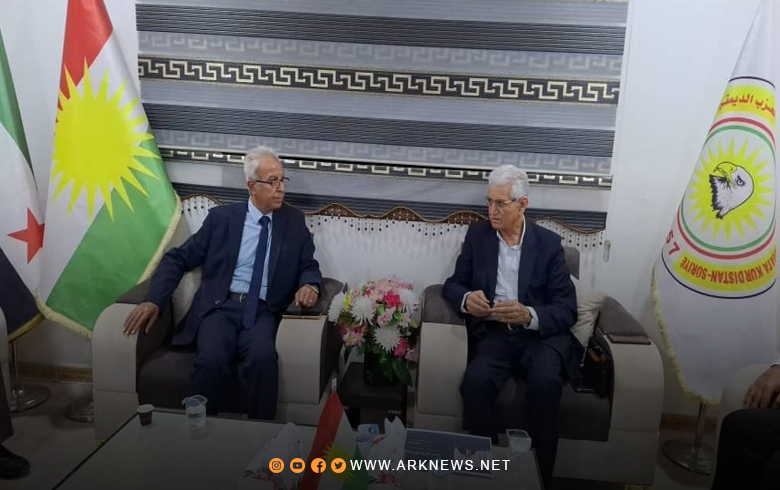
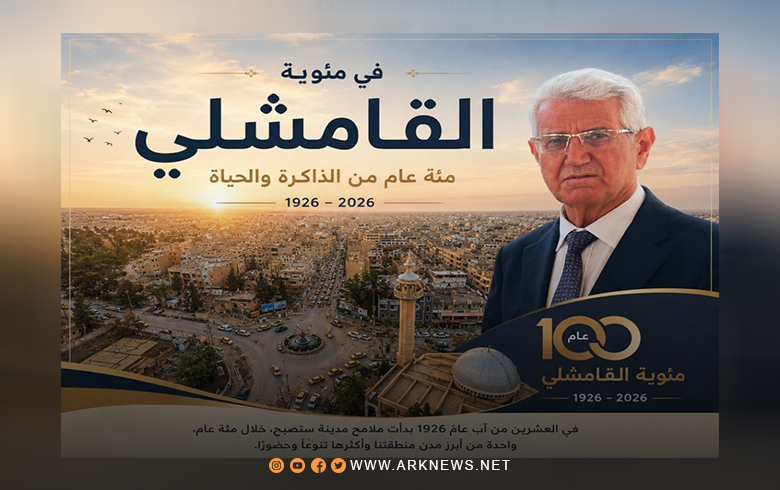
ARK News.. Mohammed Ismail, secretary of the Kurdistan Democratic Party–Syria (PDK-S) and head of the Kurdish National Council in Syria (ENKS), issued a message marking the 100th anniversary of the founding of Qamishlo, emphasizing the city’s distinctive identity as a diverse home to Kurds, Syriacs, Assyrians, Chaldeans, Armenians, Arabs, and other communities.
In his message, Ismail said Qamishlo’s uniqueness has never been rooted in a single community but rather in its ability to bring different communities together in one city, with churches alongside mosques; multiple languages and dialects; and diverse traditions, celebrations, neighborhoods, and markets that collectively shaped Qamishlo’s identity.
A Century of Memory and Life
On August 20, 1926, the foundations of a city began to emerge that would, over the following century, become one of the region’s most prominent and diverse urban centers.
Qamishlo—also known as Qamishlo and Zalin—has carried different names and languages throughout its history while remaining a single city whose streets, neighborhoods, and markets preserve the memories of successive generations that shaped its history and distinctive character.
Located on the banks of the Jaghjagh River, Qamishlo grew from a small emerging border town into a home for Kurds, Syriacs, Assyrians, Chaldeans, Armenians, and Arabs, as well as all those who lived there and contributed to its economic, social, and cultural life.
Ismail highlighted Qamishlo’s special place in the history and collective memory of Kurds in Syria, saying the city served for decades as an important center of Kurdish cultural, social, and political life and witnessed pivotal moments in the Kurdish struggle for freedom, dignity, and recognition of legitimate national rights.
However, he stressed that the city’s distinctiveness has never been defined by one community alone, but by its ability to bring its diversity together in a single urban space.
“As we conclude the first century of our city’s history, celebrating Qamishlo does not mean looking only to the past, but also thinking about its future,” Ismail said.
He expressed his hope for a safe, free, and prosperous Qamishlo that preserves its history and diversity, protects the rights of all its residents, and restores its cultural, economic, and civilizational role within a democratic, pluralistic, and decentralized Syria.
He also called for the Kurdish people to be recognized as an integral partner in Syria, with their national and constitutional rights protected, while the rights of all communities are respected and guaranteed.
Ismail concluded his message by paying tribute to Qamishlo’s residents and to those who built and preserved the city, as well as to its sons and daughters who were dispersed around the world by circumstances in Syria but continue to carry the city in their memories.
He also honored those who have passed away, saying their stories remain part of the city’s collective history, and wished Qamishlo and its people greater security, freedom, and dignity in the years ahead.
125