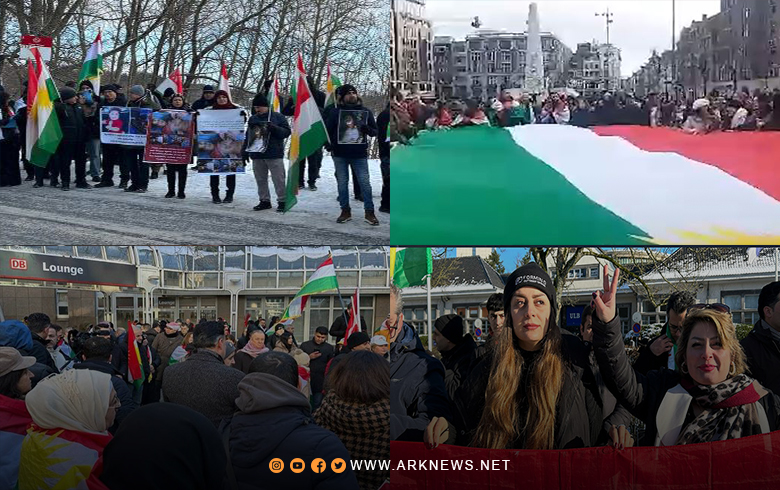
51st Anniversary of the Arab Belt Policy in Syrian Kurdistan
ARK News.. On Tuesday, June 24, 2025, marks the 51st anniversary of the implementation of the Arab Belt project in the Jazeera region of Syrian Kurdistan—one of the most dangerous and racially motivated policies aimed at undermining Kurdish existence.
On this day in 1974, the Regional Command of the ruling Ba'ath Party officially ordered the execution of the project, following ideological groundwork laid during the party’s 1966 regional conference. The plan was based on a study presented by the chauvinistic Ba'ath official Muhammad Talab Hilal, which called for dissolving the Kurdish identity within Arab nationalism through a series of discriminatory and oppressive measures.
The assigned committee redistributed lands confiscated from Kurdish landowners along a 275 km strip near the Turkish border, with a depth ranging from 10 to 15 km. These lands were granted to Arab tribal families brought in from Raqqa and the countryside of Aleppo. Around 40 settlements were hastily constructed along the strip—from Ain Dewar in the Derik area in the east to the city of Sere Kaniye in the west—equipped with the essentials for permanent resettlement. These settlements have since been expanded and developed over the decades.
Deprived of access to their ancestral lands, thousands of Kurdish farmers were forcibly displaced, leaving their villages to seek livelihoods in distant cities. This occurred in a resource-rich area adjacent to Kurdish communities across the border, with the aim of imposing demographic change at the expense of the Kurdish majority.
The Arab Belt project was part of a broader, systematic policy of chauvinism and racial discrimination that escalated since the early 1960s. After the Ba'ath Party seized power, tens of thousands of the Kurd were stripped of their Syrian citizenship through a special census carried out exclusively in Hasaka Province in 1962.
The regime also launched campaigns to Arabize place names of towns and villages, banned the Kurdish language and cultural expression, and cracked down on any form of political or social Kurdish activity. These repressive policies fluctuated in intensity depending on the prevailing political climate.
496