Iran is taking advantage of the economic crisis to "recruit Syrians" into its militias
ARK News… Iran and its militias continue to strengthen their presence and expand in the Syrian regime-held areas and throughout the country. Neither repeated Israeli airstrikes nor the International Coalition, nor their cold war with the Russians have hindered their movements or limit their presence. On the contrary, most of the Syrian areas are witnessing daily movements of Iranians and their militias.
Western Euphrates region, “Iranian protectorate”, comes to the fore
Ongoing reinforcement and tempering with Syrian historical monuments
On March 2, SOHR said that Iranian-backed militias brought in military reinforcement to areas under their control in the Deir Ezzor countryside. Three buses carrying members of the “Sayed Al-Shuhadaa” militia have arrived in Al-Herri village in Al-Bokamal countryside on the Syria-Iraq border. The entry of these forces coincided with rising alertness by Iranian-backed militiamen in the region.
On March 7, SOHR also said that in areas near the western bank of Euphrates river in the eastern countryside of Deir Ezzor reported hearing loud explosions in areas under the control of Iranian forces and their proxy militias, caused by military drills with live ammunition by the Iranian-backed militias in several areas in Al-Mayadeen desert. The drills were concentrated in the Al-Mazare area which hosts the largest gatherings of Iranian forces and their proxy militias in the region. According to SOHR sources, heavy weapons and live artillery shells were used in the military drills which were conducted under the supervision of commanders of the Iranian Revolutionary Guard Corps (IRGC) and Liwaa Fatemiyoun.
In late March, the Observatory added that from the area of the west of the Euphrates in the eastern countryside of Deir Ez-Zor, informed SOHR that a new weapons shipment belonging to pro-Iranian militias arrived in the area of al-Mayadeen coming from Iraqi territory. Where three trucks carrying vegetables and fruit entered Syria from Iraq and went to the “Al-Hal market” in al-Mayadeen, and unloaded some vegetables and fruit boxes as camouflage. After that, the trucks head to the “Al-Mazari’e” area, the largest strongholds of militias in the al-Mayadeen area.
The weapons shipment was unloaded into tunnels dug previously by ISIS and is now being used by pro-Iranian militias to move and store weapons and ammunition.
SOHR reported that the commercial movement between Iranian forces and their proxy militias on one hand, and the Iraqis on the other was growing. Official and illegal crossings between Syria and Iraq in the west Euphrates region experienced entry and exit of trucks carrying vegetables, fruit, and other products on a daily basis. The Syrian Observatory would like to point out that the Iranian-backed militias exploit this commercial movement, on many occasions not always, to bring in weapons shipments to areas under their control aboard vegetables and fruit trucks.
In mid-March, reliable sources in areas under the control of Iranian-backed militias in the western Euphrates informed SOHR that the Iranian-backed militias stored weapons and ammunition in the archaeological Qal’at Al-Rahba the “Citadel of al-Rahba” nearby Al-Mayadeen city in the eastern countryside of Deir Ezzor. According to SOHR sources, the Iranian-backed militias use underground tunnels and cellars of Qal’at Al-Rahba, used previously by ISIS to store their weapons during its control of the region, for fear of the repeated attacks on their positions and weapons and ammunition warehouses, especially since the citadel is grand and fortified. This is a grave violation and Iran is mainly responsible for any damage that may affect these archaeological Syrian sites.
Moreover, the Iranian-militias risk the lives and safety of civilians by storing a portion of weapons and ammunition in residential areas and neighborhoods in Al-Mayadeen city and countryside and Al-Bokamal city and countryside for fear of possible attacks by Israel or the International Coalition.
Iran continues to strengthen its presence in the areas on the west bank of the Euphrates River from Al-Mayadeen to the strategic city of Al-Bokamal on the Syrian-Iraqi border, through recruiting young men and propagandizing “Shi'ism” proselytizing operations (conversion to Shiite) exploiting the extreme poverty of the region’s residents, as well as seizing and purchasing real estate belonging to displaced people.
On March 14, SOHR confirmed that patrols of the military security services have informed the residents of nearly 50 houses in Al-Mayadeen city to evacuate these houses in no more than one week. It is worth noting that these houses belong to anti-regime protests who had participated in the revolutionary movement at the beginning of the “Syrian Revolution” in March 2011 and were displaced from Al-Bokamal city after ISIS captured the city. According to SOHR sources, the “Al-Asdiqaa Office” which is directly subordinated by the Iranian Revolutionary Guard Corps “IRGC” entrusted the military security services to serve the eviction notices to the residents of these houses which will be seized in a week. It is worth noting that these houses’ residents are the relatives of the owners.
On March 12, SOHR also confirmed that armed groups of the IRGC-backed militia “Abu Al-Fadl Al-Abbas” seized Al-Qal’a petrol station in Al-Bel’oum area on the outskirts of Al-Mayadeen city, at direct orders by the militia’s commander in the region, known as “Adnan Al-So’oud Abu Al-Abbas”
According to SOHR, the owners of the seized petrol stationed complained to the “Abu Al-Fadl Al-Abbas” militia commander who told them that he would rent the station and pay the rent due later. However, the Iranian-backed commander did not pay for the petrol that was already existing in the station when it was seized.
It is worth noting that “Adnan Al-So’oud” is from Al-Mayadeen city in the eastern countryside of Deir Ezzor, and he had worked as a greengrocer and also worked in a bakery affiliated to regime security services before he escaped to Damascus.
After regime forces and Iranian-backed militias captured the region, Al-So’oud returned to Al-Mayadeen where he formed the “Abu Al-Fadl Al-Abbas” militia, backed and financed directly by the Iranian Revolutionary Guard Corps (IRGC). It is also worth noting that the “Abu Al-Fadl Al-Abbas” militia is the largest Iranian-backed local militia in the Al-Mayadeen area in the east of Deir Ezzor. Reliable SOHR sources confirmed that Adnan Al-So’oud plays a significant role in purchase real estate from their owners in the Al-Mayadeen area for the favor of the Iranians.
On March 23, SOHR said that Iranian-backed militias seized a large number of shops and houses in the al-Mayadeen city in the eastern countryside of Deir Ezzor. According to SOHR sources, the Iranian-backed militias have taken over ten houses and 30 shops under the pretext that “these real estates are belonging to anti-regime individuals”.
The seized houses and shops are located in Al-Tekiyah and Al-Arba’in streets and Al-Mayadeen city’s market, where an Iranian-backed commander turned some of these houses into military headquarters while the rest was handed over to “Al-Sheikh Brigade” to turn them too into military headquarters. While the shops have been rented and the rent dues will go to the Iranian-backed militias’ commanders.
Furthermore, pro-Iranian militias continue recruiting young men and men in the western Euphrates region, exploiting the extreme poverty in the entire areas held by the Syrian regime, in light of poor living conditions and the catastrophic collapse of the economy, as they offer financial intensives to recruits, in addition to wooing the region’s clans.
According to the Syrian Observatory, the number of people who have been recruited for pro-Iranian militias in the western Euphrates region has risen to 9,850.
It is worth noting that the number of Iranians and allied militias of Syrian and non-Syrian nationalities in the region has reached more than 25 thousand, while Russia is still trying to shift the balance of power, west of the Euphrates, in terms of recruiting tribesmen and people. The scale, however, is still weighted in favor of the Iranians in this region.
On March 2, SOHR sources reported that the Al-Nour center of the Iranian Cultural Center and under the name of “Advocacy Guidance”, held introduction courses on “AlulBayt” ideology for all the people in the region of all ages.
According to Syrian Observatory sources, the courses are focused on the Shiite doctrine and its historical figures. The center promises to anyone who passes the final tests a financial reward of 100,000 Syrian pounds and a food basket.
On March 3, the Afghan militia “Fatemiyoun” organized a ceremony to commemorate the death of the militia founder “Ali Reza Tusli”, who was killed six years ago and specifically on March 3, 2015, in battles with opposition factions in Daraa governorate in southern Syria.
The ceremony was held in an al-Tamo neighborhood in al-Mayadeen city in the presence of high-profile commanders of the Revolutionary Guard, most notably “Haj Dahqan, Haj Hassan and Haj Askar”, in addition to the presence of prominent figures and delegations from the Iraqi Hezbollah, the “Asaib Ahl al-Haq” militia, the militia of “Sayyid al-Shuhada”, the “Al-Nujaba’a” movement, the Lebanese Hezbollah, the “Zainabiyon” militia and “Al-Baqir Brigade.”
As part of its ongoing activities in the Syrian desert, sometimes ISIS targets pro-Iranian militias but the largest number of the group’s attacks are launched against regime forces and loyal militias.
On March 16, SOHR said that Deir Ez-Zor countryside said that a leader of the Iranian Revolutionary Guard of Iranian nationality was killed along with his companion, who is also an Iranian national, as a result of the explosion of a landmine in the Al-Mayadeen desert in eastern Deir Ez-Zor, in areas where the Islamic State is active.
According to Syrian Observatory sources, the Iranian militia leadership in Al-Mayadeen city set up a funeral reception tent for them in the al-Tamo neighborhood in the city, while military and tribal figures came to offer condolences.
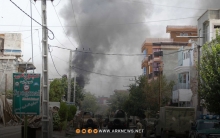
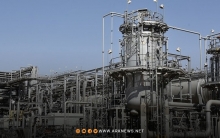
Meanwhile, airstrikes on these militias continue, where reliable sources reported, on March 22, that an unidentified drone targeted oil wells in Al-Bokamal desert in rural Deir Ezzor, near the Syria-Iraq border. According to SOHR sources, the targeted wells were rehabilitated by Iranian-backed militias, after they had been destroyed by ISIS during its control of the area.
SOHR has monitored ongoing movements by Iranian-backed militias in areas on the Syria-Lebanon border in Rif Dimashq, under supervision and support by the Lebanese Hezbollah the de facto ruler of this area. These movements include the purchasing of plots o land along the border strip, despite Syria’s laws which ban selling or purchasing any land plots in border areas and the highlight and focus by International and local media outlets, including the Syrian Observatory, on such “suspicious” movements.
Moreover, Afghani, Iranian, Iraqi, and Lebanese militiamen continue taking over luxury apartments and villas in the Bludan area and other surrounding areas, bringing the number of villas and apartments these militiamen inhabited to 120 so far. Also, SOHR sources have confirmed that these militias have purchased over 200 plots of land in the Al-Zabadani area and at least 305 plots in the Al-Tufayl border area, turning the region into an “independent” village headed by H.D. who is close to the Lebanese Hezbollah commanders.
On March 5, the pro-Iranian militia “al-Sayyida Zeinab” sent 28 members of its local affiliates to the area of al-Sayyida in the south of Damascus, mostly were residents of Al-Mayadeen area, who recently joined this militia. According to Syrian Observatory sources, the militiamen were transferred to the al-Sayyida Zeinab area with the leader of the “Sayyida Zeinab” militia, Muayyad al-Delhi, in order to undergo ideological and religious courses and convert to the” Shi’ism.”
576